
An HOA landscaping violation notice is a formal written document that identifies a specific landscaping rule breach, cites the governing CC&R section, and gives you a deadline to fix the problem before fines or further enforcement begin. Search interest in HOA violation letters rose 240% in early 2026, which tells you that more homeowners than ever are receiving these notices and need to understand what they mean. The notice is not a fine. It is the first step in a structured enforcement process, and how you respond in the first 14–30 days determines whether the matter closes quietly or escalates into hearings and penalties.
What common landscaping violations trigger HOA notices?
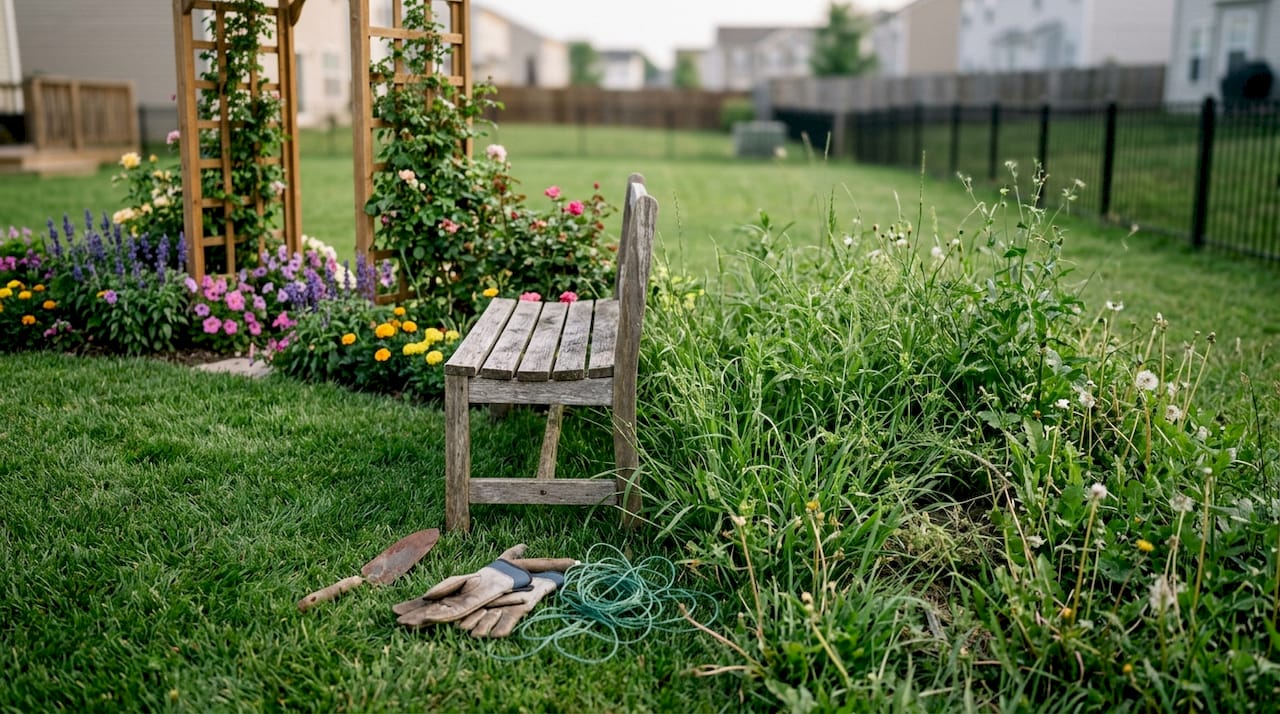
Most landscaping violation notices trace back to a short list of recurring problems. Boards and their architectural review committees inspect properties regularly, and the same issues appear on violation reports across communities nationwide.
The most frequently cited violations include:
- Overgrown grass exceeding the community's maximum height limit, often set at 4–6 inches in CC&Rs
- Dead or dying plants left in visible front yards or common-area borders
- Unapproved trees or shrubs planted without architectural review committee approval
- Unauthorized hardscaping such as gravel beds, pavers, or decorative rock placed without prior written consent
- Weed overgrowth in planting beds, along fences, or in parkways
- Irrigation neglect resulting in brown patches or standing water visible from the street
Boards typically administer landscaping guidelines through their architectural review committees, making violation notices issued under that authority binding within HOA rules. Violations are usually observed during scheduled community walkthroughs or reported by neighbors. The inspector photographs the issue, logs the date, and the board generates a formal notice tied to the specific CC&R provision.
Pro Tip: *Pull out your community's CC&Rs and read the landscaping section before the growing season starts each year. Knowing the grass height limit and plant approval process in advance prevents most notices entirely.*
What must a proper HOA landscaping violation notice include?
A legally sound violation notice does more than tell you something is wrong. It creates an enforceable record that protects both the HOA and the homeowner. Violation letters should cite the exact CC&R section violated, use clear language, and provide a fair cure period to strengthen enforceability.
A complete notice must contain:
- Homeowner name and property address clearly identified at the top
- Description of the violation written in plain language, not vague references to "appearance"
- Exact CC&R or bylaw section that the property is violating
- Photographic evidence or a description of what was observed and when
- Correction deadline stating the specific date by which the issue must be resolved
- Contact information for the board or property manager for questions or to request an appeal
- Statement of next steps explaining what happens if the deadline passes without correction
One distinction matters here. A courtesy notice is an informal reminder that prompts voluntary compliance and does not create an official enforcement record. A formal violation letter initiates enforcement and can support fines or hearings if ignored. If your notice uses words like "formal violation" or references a hearing process, treat it as the latter.
Pro Tip: *Check whether your notice references a specific CC&R section number. If it cites only vague language like "community standards," you have grounds to request clarification in writing before the deadline runs.*
What are typical timelines and homeowner responsibilities after receiving a notice?
Time is the most critical variable after a notice arrives. Cure periods typically range from 14 to 30 days, depending on your state and the type of violation. Florida law, for example, mandates a minimum 14-day cure window before enforcement can proceed.
Here is what you should do immediately after receiving a notice:
- Read the notice completely. Identify the exact CC&R section cited, the described violation, and the correction deadline.
- Inspect your property objectively. Walk your yard and compare what you see to the specific rule language, not to your general sense of how the yard looks.
- Document the current state. Take timestamped photos of the area in question before you make any changes.
- Make the correction. Complete the required work before the deadline, not on the deadline date.
- Document the completed correction. Take a second set of timestamped photos showing the finished work.
- Notify the HOA in writing. Send a brief email or letter confirming the correction is complete and attach your photos.
Due process requires that HOAs provide an opportunity for a hearing before imposing fines. Virginia's Property Owners' Association Act requires 14 days' notice before a hearing. California law caps fines at $100 per violation under AB 130. Knowing your state's rules tells you exactly how much time you have and what the board must do before any fine becomes valid.
Pro Tip: *Send your correction confirmation by email so you have a timestamped record. A phone call leaves no trail. Written communication protects you if the board claims the violation was never resolved.*
What happens if you don't address the landscaping violation?
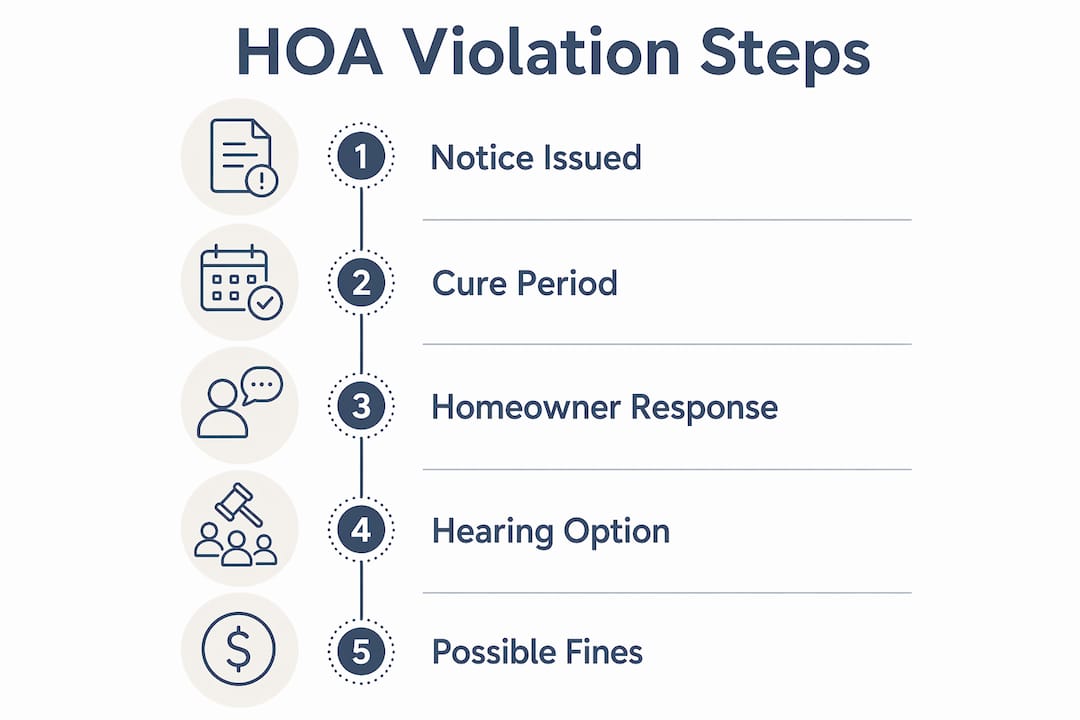
Ignoring a landscaping violation notice does not make it go away. The enforcement process follows a predictable path, and each step carries greater consequences.
- First notice: Formal written notice with a correction deadline and no fine yet
- Second notice or fine letter: Issued after the cure period expires without correction; fines begin accruing
- Hearing notice: The board schedules a hearing and must provide advance written notice, typically 14 days under state law
- Lien filing: For significant unpaid fines, some HOAs file a lien against the property, which can affect your ability to sell or refinance
- Amenity suspension: Many HOAs suspend pool, gym, or clubhouse access for homeowners with unresolved violations
> *Proper notice and hearing steps are not optional formalities. Skipping them risks invalidating the board's authority to fine or enforce, giving homeowners grounds to challenge the entire action.*
The financial exposure is real but bounded by state law. California caps landscaping fines at $100 per violation, but fines can compound daily if the violation continues. Proactive communication and documentation by homeowners often resolve violations before escalation reaches the lien stage. The homeowners who end up in hearings are almost always the ones who did not respond to the first notice.
How to respond effectively to an HOA landscaping violation notice
An effective response protects your rights and closes the matter quickly. The goal is to either correct the violation cleanly or dispute it with specific evidence. Vague objections and delayed responses almost always work against you.
Follow these steps:
- Review the exact rule cited. Read the CC&R section word for word. The board must prove your property violates that specific language, not a general community preference.
- Conduct an objective self-audit. Compare your property to the cited rule language directly. Set aside how the yard looks to you personally.
- Take sequenced photos. Best practice is three sets: before work begins, during the correction, and after completion. A single "after" photo leaves too much room for dispute.
- Request more time if needed. If the correction requires contractor work or permits, contact the HOA in writing before the deadline and ask for an extension. Most boards grant reasonable requests made in good faith.
- Request a hearing if you disagree. You have the right to present your case before any fine is imposed. Use this right rather than simply ignoring a notice you believe is wrong.
- Dispute selective enforcement with evidence. If you believe the board is targeting your property while ignoring identical violations nearby, collect dated, specific evidence showing the inconsistency. Photos of neighboring properties with the same condition, dated and labeled, are the minimum standard for a credible dispute.
All communication with the board should be written, calm, and factual. Emotional responses rarely help and sometimes create a paper trail that works against you in a hearing. A well-structured response letter that references the CC&R section, describes your correction, and attaches photos is the most effective tool you have.
Key takeaways
A landscaping violation notice is a formal enforcement document, not a suggestion, and your response within the cure period determines whether the matter ends there or escalates to fines and hearings.
| Point | Details |
|---|---|
| Notice is not a fine | A violation notice starts the enforcement process; fines only follow after the cure period expires without correction. |
| Cure periods are time-bound | Most states allow 14–30 days for correction; Florida mandates a minimum 14-day window before enforcement proceeds. |
| Documentation wins disputes | Take sequenced photos before, during, and after corrections to create an unambiguous compliance record. |
| Due process protects you | Boards must provide a hearing opportunity before imposing fines; skipping this step can invalidate enforcement. |
| Written communication is required | Confirm all corrections and requests in writing to create a timestamped record that protects you if the matter escalates. |
What I've learned from watching homeowners handle these notices
Most homeowners who end up in HOA hearings over landscaping violations made one mistake: they waited. They assumed the notice was informal, or they planned to fix the issue "soon," and the deadline passed. By the time they engaged, the board had already issued a fine letter and scheduled a hearing.
The notice itself is rarely the problem. The problem is the gap between receiving it and acting on it. I have seen homeowners with completely valid disputes lose their cases simply because they had no documentation and no written record of communication. The board had photos. The homeowner had nothing.
The other common misunderstanding is treating a courtesy notice and a formal violation letter as the same thing. A courtesy notice is a nudge. A formal violation letter is a legal document with a deadline. Reading the language carefully tells you which one you have and how urgently you need to act.
Boards that skip due process steps, like issuing fines without a hearing notice, are actually handing homeowners a defense. If the board fails to follow due process, homeowners can challenge the enforcement action and avoid fines entirely. Know your state's rules. They exist to protect you as much as they protect the community.
The homeowners who handle these situations best are the ones who stay calm, read the notice carefully, fix the problem if it is real, and communicate in writing throughout. That approach closes most violations in under two weeks.
> *— Blake*
Hoaletterai makes responding to violation notices straightforward
Receiving a landscaping violation notice is stressful, but drafting a clear, state-compliant response does not have to be. Hoaletterai generates professional landscaping violation response letters in minutes, with built-in state-specific language that reflects your local HOA laws and CC&R requirements.

The platform covers state-by-state HOA violation notice rules so you know exactly what your board is required to include and what your rights are before the cure period expires. Whether you are a homeowner drafting a response or a board member issuing a compliant notice, Hoaletterai provides templates, a one-page preview, and USPS mailing options so the entire process stays in one place. No legal background required.
FAQ
What is an HOA landscaping violation notice?
An HOA landscaping violation notice is a formal written document that identifies a specific landscaping rule breach, cites the relevant CC&R section, and gives the homeowner a deadline to correct the problem before fines or further enforcement begin.
How long do I have to fix a landscaping violation?
Cure periods typically range from 14 to 30 days depending on your state and the type of violation. Florida law mandates a minimum 14-day window before enforcement can proceed.
Can my HOA fine me without sending a notice first?
No. Due process requires that HOAs provide a formal notice and an opportunity for a hearing before imposing fines. Boards that skip these steps risk having their enforcement actions invalidated.
What if I disagree with the landscaping violation?
Request a hearing in writing before the deadline. If you believe the board is enforcing selectively, gather dated photos of neighboring properties showing the same condition as specific, documented evidence for your dispute.
What is the difference between a courtesy notice and a formal violation letter?
A courtesy notice is an informal reminder with no enforcement record attached. A formal violation letter initiates the enforcement process, creates an official record, and can support fines or hearings if ignored.
Recommended
- HOA Lawn Maintenance Violation Letter Template — Landscaping Notice | HOA Letter AI
- HOA Landscaping Violation Response Letter (State-Compliant HOA Letter) | HOA Letter AI
- HOA Violation Letter Laws by State — Notice Requirements & Fine Rules | HOA Letter AI
- HOA Warning Letter Template — Courtesy Notice Before Fines | HOA Letter AI