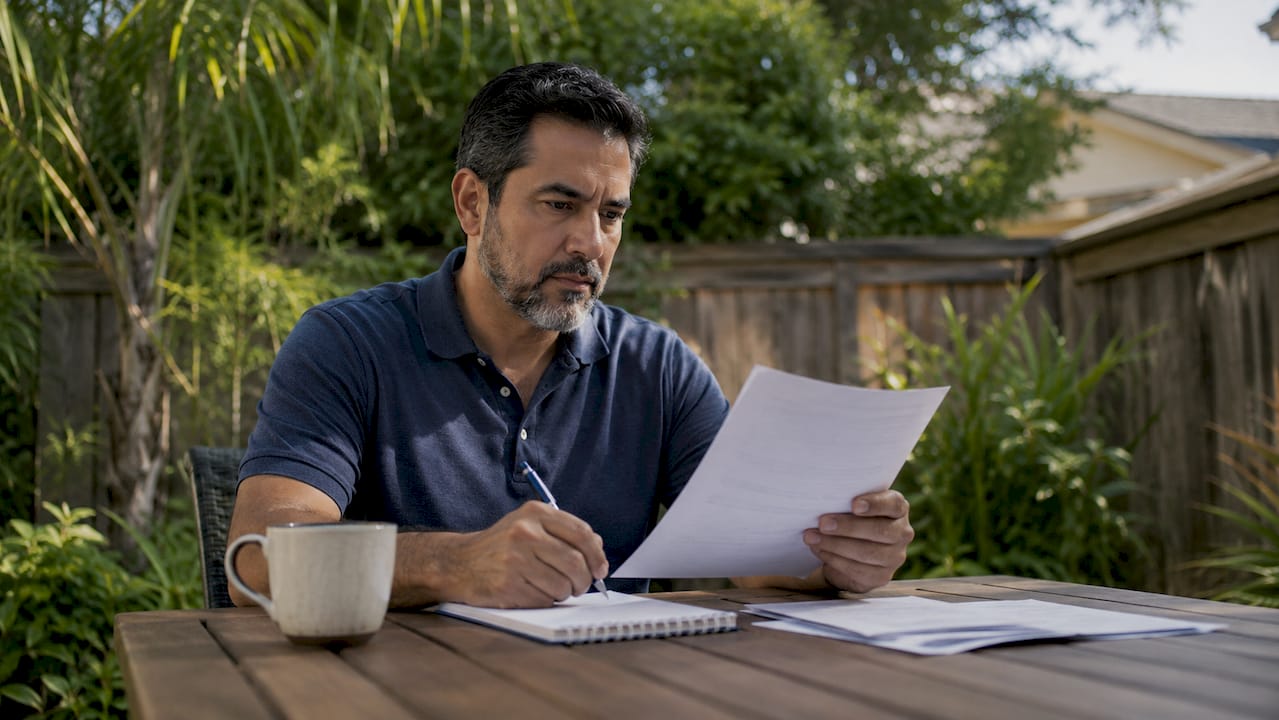
Responding to an HOA compliance notice is a formal process that requires a written reply, specific rule references, and documented evidence delivered within a set deadline. Most homeowners treat these notices as personal attacks. They are not. They are procedural communications governed by your community's CC&Rs, bylaws, and applicable state statutes. How you respond in the first 48 hours determines whether the matter closes quickly or escalates into fines, hearings, and legal costs. This guide walks you through every step, from reading the notice correctly to protecting your appeal rights.
What does an HOA compliance notice actually say?
An HOA compliance notice is a formal written document that identifies a specific rule violation, cites the governing provision, and demands corrective action within a stated deadline. Reading it carefully is the first defensive move you have.
The main types of HOA compliance notices
Not every notice carries the same weight. The three most common types are:
- Courtesy notice: A first warning with no fine attached. Initial notices are warnings; a quick acknowledgment email within 24–48 hours stops the escalation clock and buys you time to address the issue.
- Formal violation notice: A written citation referencing a specific CC&R or bylaw provision. This notice typically triggers the compliance deadline.
- Fine notice: Issued after the correction deadline passes without resolution. Examples of fine notices include dollar amounts per day, lump sums, or tiered penalties depending on your community's enforcement schedule.
Every notice should contain four elements: the rule citation, a description of the violation, the required corrective action, and an escalation warning if you miss the deadline.
Pro Tip: *Pull out your CC&Rs and find the exact rule cited in the notice. Boards sometimes cite the wrong section. If the cited rule does not match your situation, that discrepancy becomes part of your written response.*
Compliance deadlines you need to know
Standard HOA violation notices give homeowners 10–30 days to correct the issue or reply in writing before further enforcement begins. That window is shorter than most people expect. Mark the deadline on your calendar the day you receive the notice, and treat the response deadline as a hard cutoff, not a suggestion.
How to gather evidence before you respond
Your written response is only as strong as the evidence behind it. Before you write a single word, inspect your property and your records.
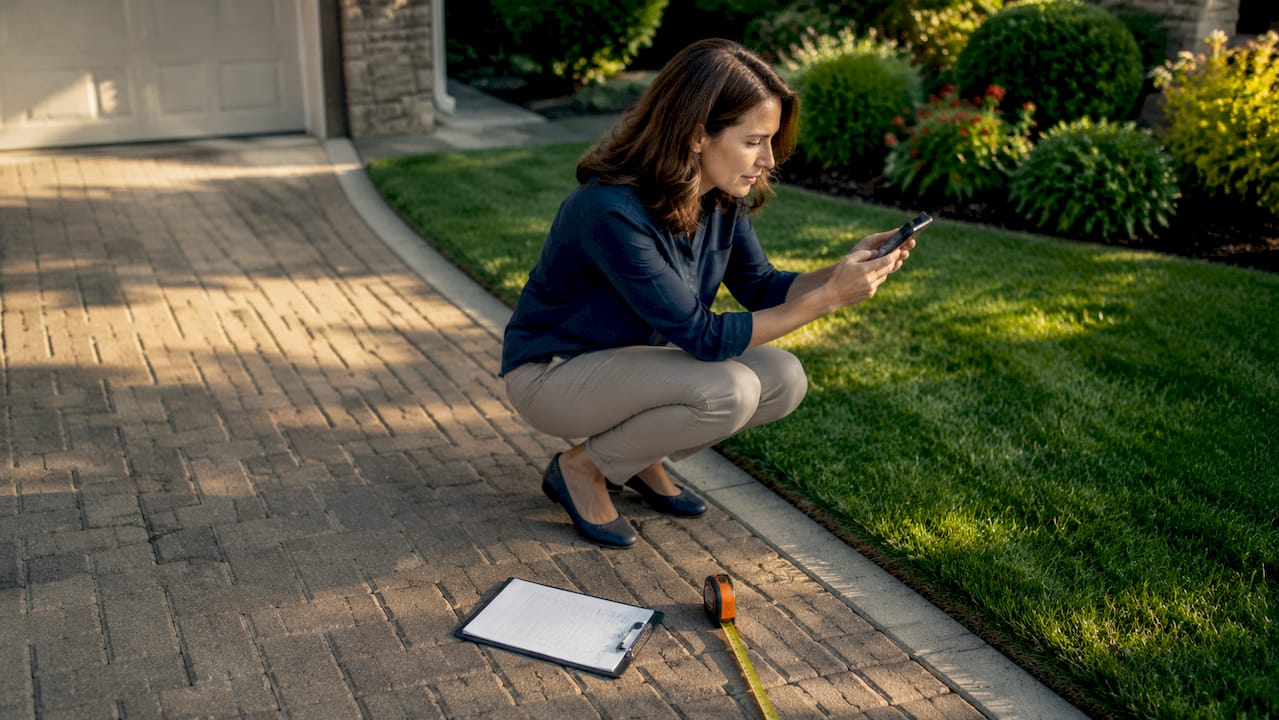
Start with a physical walkthrough of the cited area. Take time-stamped photos from multiple angles. If the violation involves a repair you already completed, locate the contractor receipt or permit. If a neighbor's property or a shared area is actually the source of the problem, photograph that too.
The documents and evidence worth collecting include:
- Time-stamped photos of your property on or after the notice date
- Repair receipts or contractor invoices showing completed work
- Witness statements from neighbors who can confirm relevant facts
- Your governing documents (CC&Rs, bylaws, rules and regulations) with the cited section highlighted
- Your property's violation history, which you can request from the HOA management company
That last item is more powerful than most homeowners realize. Requesting your violation history can reveal selective enforcement patterns. If the board cited you for a fence height but ignored three identical fences on your street, that inconsistency is a legitimate defense.
Pro Tip: *Use your phone's camera metadata or a free tool like Google Photos to confirm the date and time on every photo. Undated photos carry far less weight in a hearing.*
For violations involving structural conditions or property boundaries, a professional inspection report can add credibility to your response. Understanding standard inspection documentation helps you present findings in language the board will recognize.
How to write and submit your HOA violation notice response
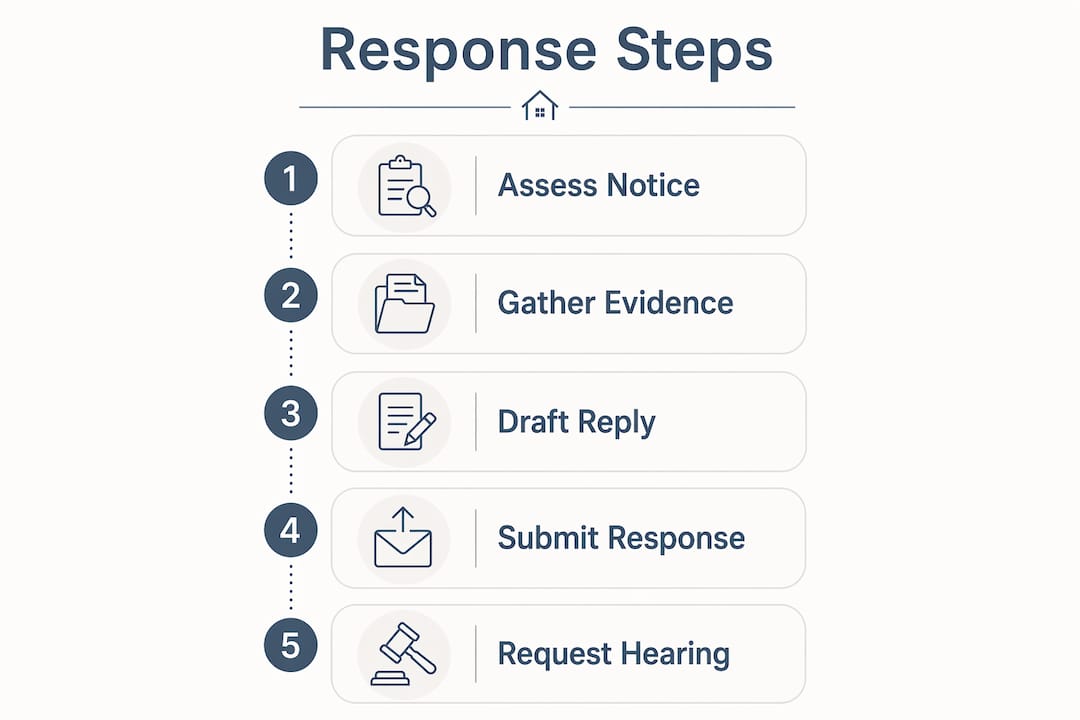
A well-structured written response does three things: it acknowledges the notice, states your position clearly, and provides supporting evidence or a correction plan. Follow these steps in order.
- Reference the notice directly. Open with the notice date, the violation number if one is assigned, and the specific rule cited. This shows the board you read the notice and are responding to the correct matter.
- State your position. Choose one of four stances: admission with a correction plan, denial with evidence, a request for a hearing, or a request for a deadline extension. Be direct. Vague responses invite follow-up enforcement.
- Cite the governing document provision. Quote the exact language from your CC&Rs or bylaws. If the board cited Section 4.3 but Section 4.3 does not apply to your situation, say so and cite the correct section.
- Attach your evidence. Include photos, receipts, or a written correction timeline. Label each attachment clearly and reference it in the body of your letter.
- Send via a method that creates a record. Written responses referencing the cited rule should be sent by email with a read receipt or by certified mail with return receipt. Both methods create a timestamped record that protects you if the dispute escalates.
- Keep copies of everything. Save the original notice, your response, all attachments, and every piece of correspondence in a dedicated folder, physical or digital.
The table below shows how your response approach changes based on your situation.
| Situation | Recommended response approach |
|---|---|
| Violation is valid, correction underway | Admit, provide a written correction timeline with a completion date |
| Violation is disputed or incorrect | Deny with evidence, cite the specific governing document provision |
| You need more time to correct | Request a written extension with a documented reason and proposed deadline |
| You believe enforcement is selective | Request a hearing and attach your violation history comparison |
Pro Tip: *Never respond verbally at a board meeting without a written follow-up. Verbal statements are not part of the official record. Always confirm what was said in a follow-up email the same day.*
For a ready-to-use structure, the HOA violation response letter template from Hoaletterai covers the key sections and helps you avoid common formatting mistakes.
What are your rights to hearings, appeals, and extensions?
Homeowners have formal procedural rights in the HOA compliance process. Most governing documents and state statutes protect these rights explicitly.
The right to a hearing is one of the most important protections you have. Requesting a hearing in writing with a request for formal minutes or a recording is best practice for due process. Most boards must provide a hearing notice at least 10–15 days in advance, giving you fair preparation time. Use that time to organize your evidence and prepare a clear verbal statement.
The right to appeal follows a hearing decision. Your CC&Rs will specify the appeal window, typically 10–30 days after the board's written decision. Submit your appeal in writing, reference the hearing outcome, and include any new evidence not presented at the hearing.
Requesting a deadline extension is underused and highly effective. Proactive communication with documented reasons often prevents fines and demonstrates good faith. A contractor delay, a medical situation, or a supply backlog are all legitimate grounds. Put the request in writing before the deadline expires, not after.
> *The single most damaging mistake a homeowner can make is silence. Ignoring a notice forfeits your right to a hearing or appeal and leads to automatic escalation. Even if you believe the violation is wrong, respond in writing within the deadline.*
One step most homeowners skip: after you correct a violation, request written confirmation that the matter is closed. Without a closure letter, an unresolved flag can re-escalate during an audit months later. A single email asking the board to confirm the violation is resolved takes two minutes and protects you indefinitely.
For a full breakdown of what your state requires at each stage, the HOA violation letter laws by state resource from Hoaletterai covers notice requirements and fine rules across all 50 states.
Key takeaways
Responding to an HOA compliance notice effectively requires a written reply with specific rule references, supporting evidence, and delivery within the 10–30 day deadline to preserve your appeal rights.
| Point | Details |
|---|---|
| Respond in writing immediately | Send a written reply within 24–48 hours to stop the escalation clock. |
| Know your notice type | Courtesy, formal, and fine notices each require a different response strategy. |
| Gather evidence first | Time-stamped photos, receipts, and violation history strengthen any response. |
| Use certified mail or email with read receipt | Both methods create a timestamped record that protects you in disputes. |
| Request written closure | Always confirm in writing that a corrected violation is officially closed. |
The mistake I see homeowners make most often
Most homeowners who contact me about HOA disputes share one thing in common: they waited too long to respond. Some assumed the first notice was a fine and panicked. Others thought ignoring it would make it go away. Neither instinct serves you.
The first notice is almost always a courtesy warning. Treating it as an invitation to open a dialog, rather than a threat, changes everything. A calm, factual email sent within 48 hours signals to the board that you are engaged and cooperative. Boards escalate faster against silence than against homeowners who communicate clearly.
I also see homeowners skip the violation history request. That single document has changed the outcome of more disputes than any other piece of evidence. If your board cited you for a fence but ignored five identical fences on the same block, that is selective enforcement. It is a real legal defense in most states, and you cannot make it without the data.
The other habit worth building: confirm everything in writing after the fact. If a board member tells you at a neighborhood meeting that your issue is resolved, follow up with an email that same evening. Write something like, "Per our conversation today, I understand the violation notice dated [date] is now closed. Please confirm." That email is your protection if the matter resurfaces.
Stay professional throughout. HOA boards are made up of your neighbors. Tone matters. A response that is firm, factual, and respectful gets a faster, more favorable outcome than one that reads as hostile. You are not fighting the board. You are communicating with it.
> *— Blake*
How Hoaletterai makes your response faster and more accurate
Writing a compliant, well-structured response to an HOA notice takes time most homeowners do not have. Hoaletterai generates professionally formatted HOA violation response letters in minutes, with built-in state-specific language and rule citation fields that match your governing documents.

The platform covers the full compliance process, from initial responses to hearing requests and appeals. Every letter includes a one-page preview before you send, and you can choose USPS mailing directly from the platform. Use the HOA violation letter generator to preview your response for free and get it right the first time.
FAQ
How long do I have to respond to an HOA compliance notice?
Most HOA violation notices give homeowners 10–30 days to respond or correct the issue before further enforcement begins. Sending an acknowledgment email within 24–48 hours stops the escalation clock even before your full response is ready.
What should I include in my HOA violation notice response?
Your response should reference the notice date and rule citation, state your position clearly (admission, denial, or extension request), and attach supporting evidence such as photos or receipts. Send it by email with a read receipt or certified mail to create a timestamped record.
Can I appeal an HOA fine or violation decision?
Yes. Most governing documents give homeowners the right to request a formal hearing and to appeal the board's decision in writing, typically within 10–30 days of the written ruling. Boards are generally required to provide at least 10–15 days advance notice before any scheduled hearing.
What happens if I ignore an HOA compliance notice?
Ignoring a notice forfeits your right to a hearing or appeal and triggers automatic escalation, which can include daily fines, liens, or legal action. Even a disputed violation requires a written response within the stated deadline.
Do I need to confirm in writing when a violation is corrected?
Yes. Always request a written closure confirmation from your HOA after correcting a violation. Without it, an unresolved flag can re-escalate during a future audit, even months after you completed the fix.
Recommended
- HOA Violation Response Letter: Template & Tips for Homeowners | HOA Letter AI
- Texas HOA Compliance Guide: Violation Letter Requirements Under Chapter 209 | HOA Letter AI
- Florida HOA Compliance Guide: Violation Letters Under Chapter 720 & 718 | HOA Letter AI
- HOA Landscaping Violation Response Letter (State-Compliant HOA Letter) | HOA Letter AI