
A homeowner response letter to an HOA is a formal written reply to a violation notice that states your position, presents supporting evidence, and requests a specific outcome. This document is your primary tool for HOA dispute resolution, and how you write it directly affects whether the board takes you seriously. Get the format wrong, and your letter gets ignored. Get the tone wrong, and you escalate a minor issue into a costly fight. This guide covers the homeowner response letter HOA explained in full, from structure to legal citations to the exact language that gets results.
What is the proper format for an HOA response letter?
Effective HOA response letters follow a standard business format that includes a date block, full contact information for both parties, a subject line referencing the violation number, and a formal signature. This structure is not optional. It signals professionalism and creates a clear paper trail that matters if the dispute escalates.
Here are the core components every HOA response letter format must include:
- Date and contact block: Your full name, property address, parcel ID, and the date. Below that, add the HOA's name and mailing address.
- Subject line: Reference the exact violation notice number or the CC&R section cited. Example: "Re: Violation Notice #2024-047, Section 4.3 of CC&Rs."
- Opening paragraph: State your purpose and position in the first two sentences. Do not bury your main point.
- Body paragraphs: Present facts in chronological order. Include dates, prior communications, and any corrective steps already taken.
- Evidence list: Attach exhibits such as dated photos, receipts, prior correspondence, and governing document excerpts. List each attachment explicitly at the end of the letter.
- Formal closing: Use "Sincerely" or "Respectfully," followed by your printed name and signature.
One detail most homeowners miss is the parcel ID. Including it prevents your letter from being misfiled and triggers the correct property record in the HOA's system.
Your letter must be a stand-alone document that any reader, including an attorney who has never seen your file, can understand without additional context. HOA boards change members. Attorneys get brought in mid-dispute. Write as if the reader knows nothing about your history with the association.
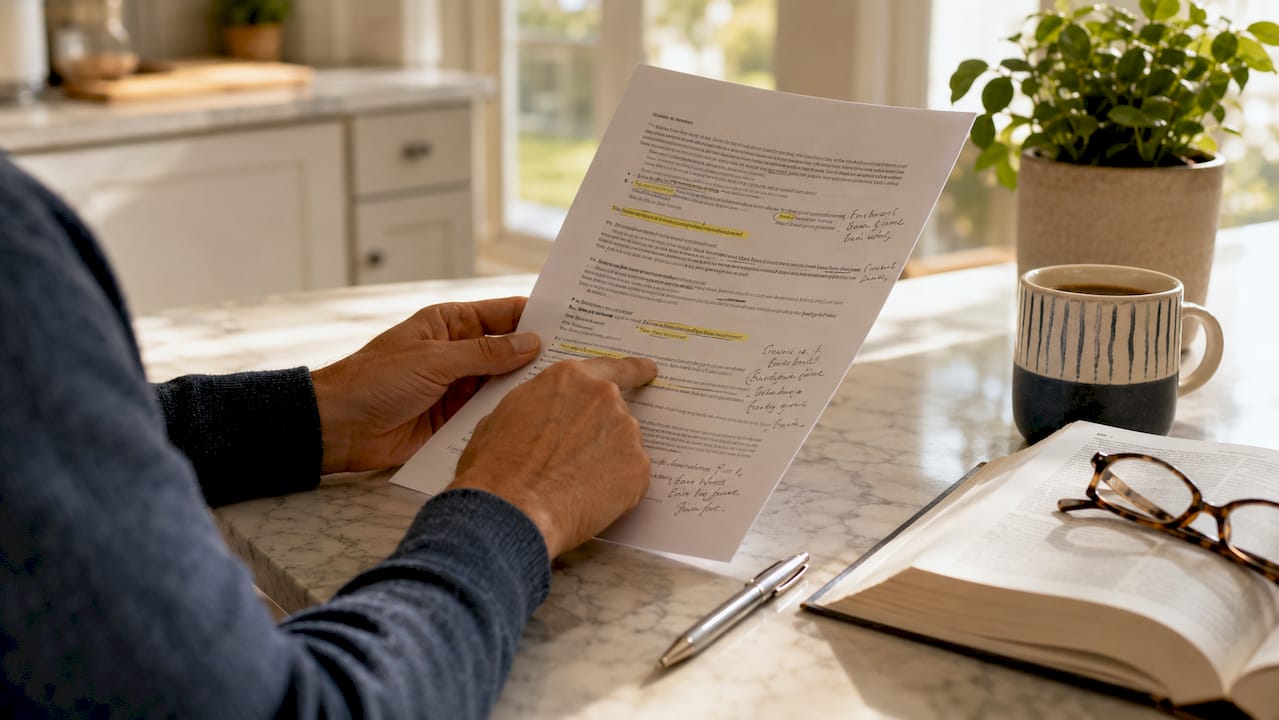
Pro Tip: *Address your letter to the specific person or committee named in the violation notice. "Dear HOA Compliance Committee" is more effective than a generic greeting and keeps the chain of communication intact.*
Send your letter by certified mail with return receipt. This creates a legal paper trail and, in many states, triggers statutory deadlines the HOA must meet. If they miss those deadlines, your certified mail receipt becomes evidence of their non-compliance.
How should you state your position in the letter?
State whether you admit, deny, or request a hearing in the very first paragraph. HOA boards are busy. If your position is buried in paragraph four, it may never get read. Attorney John Cowherd of Cowherd PLC makes this point directly: state your "ask" clearly at the top so the board knows exactly what you want before reading further.
There are three positions you can take, and each requires a different approach:
- Admission with a correction plan. If the violation is valid, say so. Then provide a specific deadline by which you will correct it. Example: "I acknowledge that the fence paint does not comply with Section 5.2. I will repaint it to the approved color by March 15, 2026." Boards respond well to homeowners who take responsibility and offer a concrete timeline.
- Denial with evidence. If the violation is incorrect, say so directly. Cite the specific CC&R section the HOA referenced, then explain why it does not apply to your situation. Attach dated photos, receipts, or contractor records that support your denial. Example: "The landscaping cited in Notice #2024-047 was completed on January 10, 2026, as shown in the attached contractor invoice."
- Request for hearing or extension. If you need more information or believe the matter requires discussion, request a formal hearing. State why the issue cannot be resolved by letter alone. This is also the right move when you need more time to gather evidence.
Pro Tip: *Keep your opening position statement to two sentences maximum. One sentence states your position. The second states what you are asking the board to do. Everything else is supporting detail.*
Clarity at the start of your letter is not just courteous. It prevents the board from making assumptions about your intent, which is how minor disputes turn into formal hearings.
What tone and style work best with HOA boards?
A factual, solution-oriented tone is the most effective approach in any HOA response letter. Threats of litigation or regulatory complaints in an initial letter almost always backfire. They put the HOA's attorney on alert, harden the board's position, and eliminate any chance of a quick, informal resolution.
The tone guidelines below apply to every homeowner association letter sample worth following:
- State facts, not feelings. "The fence was installed on April 3, 2025" is stronger than "I feel this notice is unfair."
- Avoid accusatory language. Phrases like "you failed to" or "your board ignored" create defensiveness. Use neutral language: "the notice does not reflect" or "the record shows."
- Acknowledge the process. A sentence like "I respect the association's role in maintaining community standards" costs you nothing and signals good faith.
- Be firm without being aggressive. You can assert your rights clearly without threatening anyone. "I request a written response within 30 days per Section 720.303 of the Florida Statutes" is firm and professional.
Maintaining a polite, solution-focused approach also protects your standing in the community. You may live next to these board members for years. A letter that reads as reasonable and cooperative keeps that relationship intact, even when you disagree.
How to use legal citations effectively in your letter
Precise citations of HOA governing documents and state statutes strengthen your position and trigger procedural obligations the HOA must follow. A citation is not a threat. It is a reference point that tells the board you have done your homework.
Here is how to cite governing documents and laws correctly:
| Citation Type | How to Use It | Example |
|---|---|---|
| CC&R Section | Reference the exact section number and quote the relevant language | "Per Section 4.3 of the CC&Rs: 'Fences shall not exceed six feet in height.'" |
| Bylaw Provision | Cite the bylaw article and section | "Article III, Section 2 of the Bylaws grants homeowners the right to a hearing." |
| State Statute | Include the full statute number and what it requires | "Florida Statute 720.303 requires the HOA to respond within 30 days." |
| Exhibit Reference | List all attachments with labels | "See Exhibit A: Dated photograph, January 10, 2026." |
Legal citations should be used thoughtfully to trigger procedural obligations without threatening litigation prematurely. For example, citing Florida Statute 720.303 in a records request letter sets a statutory clock. If the HOA misses the deadline, your certified mail receipt creates a rebuttable presumption of willful non-compliance. That is leverage you earn through proper procedure, not threats.
The most common citation error is quoting a statute without explaining what it requires. Always follow a citation with one sentence stating what the law obligates the HOA to do. That sentence does the work for you.
Pro Tip: *When you attach governing document excerpts as exhibits, highlight the specific language you are relying on. It saves the reader time and makes your argument impossible to overlook.*
If you are responding to a landscaping violation or an unauthorized modification notice, the governing document section most relevant to your situation will almost always be in the CC&Rs, not the bylaws. Know the difference before you cite.
Key takeaways
A well-structured, factual homeowner response letter is the single most effective tool for resolving HOA disputes without escalation or legal fees.
| Point | Details |
|---|---|
| Format matters legally | Include date, parcel ID, violation number, and certified mail delivery to create a valid paper trail. |
| State your position first | Admit, deny, or request a hearing in the opening paragraph so the board knows your intent immediately. |
| Tone determines outcomes | Factual, solution-oriented language keeps the board cooperative; threats trigger attorneys and harden positions. |
| Cite governing documents precisely | Reference exact CC&R sections and state statutes to trigger procedural obligations and strengthen your case. |
| Letters must stand alone | Write as if the reader has no prior knowledge of your situation, including any attorneys reviewing the file. |
Why most HOA response letters miss the mark
I have reviewed hundreds of homeowner letters over the years, and the same problem appears in nearly every one. The homeowner writes three paragraphs of background before saying what they actually want. By the time they get to the point, the board member reading it has already moved on.
The fix is simple but counterintuitive. Put your ask in sentence two. Not paragraph two. Sentence two. The first sentence states who you are and what notice you are responding to. The second sentence states exactly what you want the board to do. Everything after that is evidence supporting that request.
The second mistake I see constantly is emotional language dressed up as legal argument. Phrases like "this is completely unfair" or "the board has always had it out for me" do not belong in a formal letter. They signal to the board's attorney that you are reactive, not prepared. A calm letter with three cited CC&R sections and two dated photos is worth more than two pages of grievance.
The third mistake is failing to follow up. You send a letter, hear nothing for three weeks, and assume the matter is resolved. It is not. Send a follow-up letter referencing your original, restating your ask, and noting the date of your first correspondence. If you sent by certified mail, reference the tracking number. That follow-up letter, combined with your original, builds the record you need if the dispute ever reaches a hearing or a court.
When the dispute involves significant fines or potential legal action, get an HOA attorney involved before you send anything. A single consultation can save you from a letter that inadvertently waives your rights or admits liability you did not intend to concede. You can find violation response guidance to help you prepare before that conversation.
> *— Blake*
Write a better HOA response letter with Hoaletterai
Drafting a response letter from scratch is time-consuming, and the stakes are real. One poorly worded sentence can escalate a minor compliance issue into a formal hearing.

Hoaletterai generates state-compliant, professionally formatted response letters in minutes. The platform pulls in the correct state-specific language, references the right governing document sections, and formats everything to the standard a board or attorney expects to see. You choose your position, add your facts, and get a letter ready to send. Hoaletterai also offers USPS mailing directly from the platform, so your certified mail paper trail starts the moment you click send. Check the HOA violation laws by state resource to confirm what your state requires before you respond, then use Hoaletterai to build a letter that meets every requirement.
FAQ
What is a homeowner response letter to an HOA?
A homeowner response letter to an HOA is a formal written reply to a violation notice that states your position, presents evidence, and requests a specific outcome. It serves as the official record of your response in any dispute resolution process.
How long should an HOA response letter be?
One to two pages is the standard length for an HOA response letter. Longer letters dilute your main argument; shorter letters may omit critical evidence or citations.
Should i send my HOA response letter by certified mail?
Yes. Certified mail with return receipt creates a legal paper trail and, in states like Florida, triggers statutory response deadlines the HOA must meet.
What if i disagree with the HOA violation but have no written proof?
State your denial clearly, cite the relevant CC&R section, and request a formal hearing. A hearing gives you the opportunity to present your case in person and ask the board to show its evidence.
When should i hire an attorney for an HOA dispute?
Hire an attorney before responding if the violation involves significant fines, potential legal action, or a matter that could affect your property rights. A single consultation is far less expensive than correcting a letter that inadvertently concedes liability.
Recommended
- HOA Violation Response Letter: Template & Tips for Homeowners | HOA Letter AI
- HOA Landscaping Violation Response Letter (State-Compliant HOA Letter) | HOA Letter AI
- HOA Trash Violation Response Letter (State-Compliant HOA Letter) | HOA Letter AI
- HOA Noise Complaint Response Letter (State-Compliant HOA Letter) | HOA Letter AI
Drafting support for HOA notices
Use the HOA letter drafter to turn this guidance into a resident-ready notice, compare reusable HOA letter templates, or review the property manager workflow for higher-volume enforcement work.