
A notice of non-compliance in property is a formal, written communication notifying a property owner, tenant, or contractor that they have failed to meet a legal, contractual, or regulatory obligation, with a required correction period before enforcement begins. In property management, this document goes by several names: notice of violation (NOV), enforcement notice, or cure notice. Regardless of the label, the function is identical. You receive the notice, you have a defined window to fix the problem, and failure to act triggers escalating consequences. Understanding what is notice of non-compliance property means recognizing it as a preliminary warning, not a final verdict, and that distinction changes everything about how you should respond.
What is a notice of non-compliance in property management?
A notice of non-compliance is a formal written notification that a specific legal, contractual, or safety obligation has not been met, with cure periods typically ranging between 3 and 30 days depending on jurisdiction and violation type. This is the industry-standard term used by municipal code enforcement offices, homeowners' associations (HOAs), and construction contract administrators alike. The cure period is the most critical element of the document. It defines exactly how long you have before the issuing authority can escalate to fines, liens, or legal action.
Property compliance issues that trigger these notices fall into three broad categories. First, building and safety code violations: structural defects, electrical hazards, unpermitted construction, or failure to complete a required inspection such as an Electrical Installation Condition Report (EICR). Second, HOA rule violations: unapproved exterior modifications, landscaping failures, parking infractions, or short-term rental violations that breach community covenants. Third, contractual non-compliance in construction: a contractor failing to meet project milestones, use specified materials, or follow approved plans.
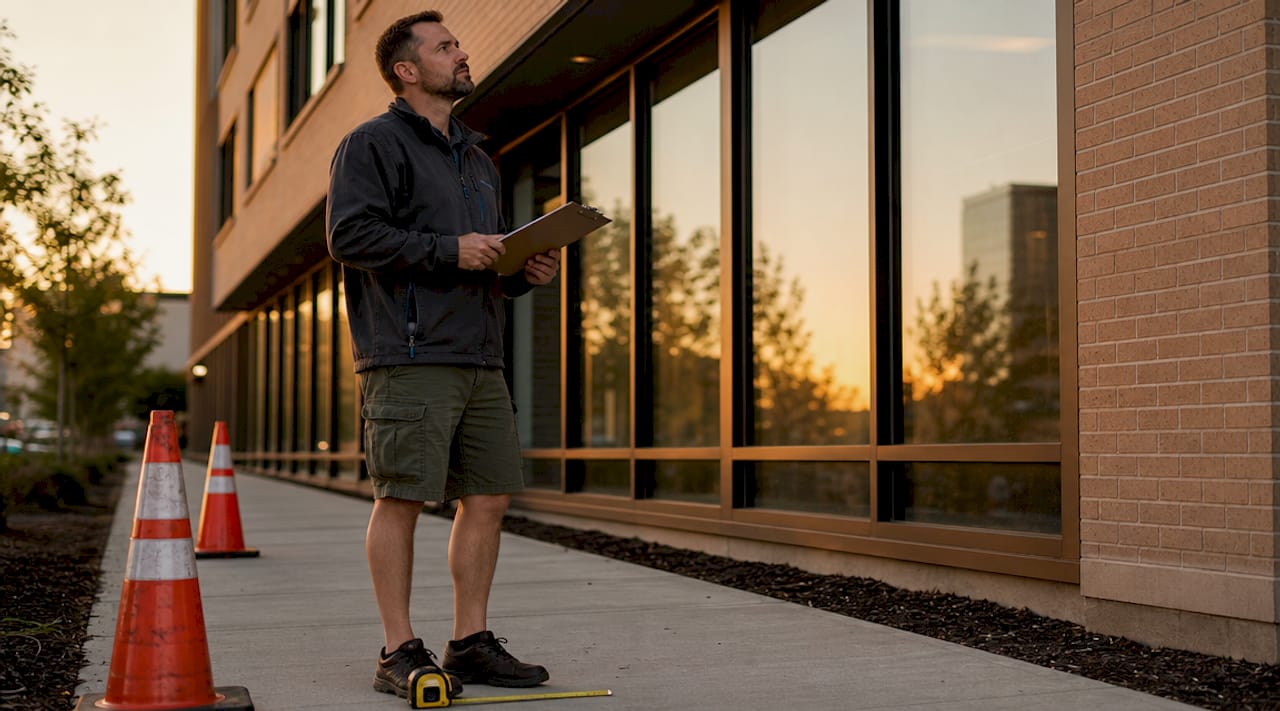
The notice serves a specific legal purpose beyond simply alerting you to a problem. It creates an official record that the issuing party fulfilled its obligation to notify you before taking enforcement action. Without that record, many jurisdictions prohibit agencies from imposing fines or pursuing legal remedies. That is why the document typically includes the specific code section violated, the required corrective action, the deadline, and the consequences of non-action.
What legal standards trigger a non-compliance notice?
Several categories of legal and contractual obligations commonly generate property compliance issues serious enough to warrant a formal notice:
- Building codes and safety regulations: Local and state building codes set minimum standards for structural integrity, fire safety, electrical systems, and habitability. Violations discovered during inspections, or reported by neighbors and tenants, trigger notices from municipal code enforcement.
- HOA governing documents: Covenants, Conditions, and Restrictions (CC&Rs), bylaws, and community rules carry contractual force for all homeowners in the association. An HOA board issues violation notices when a member breaches these documents, whether through fence height, paint color, or noise ordinance violations.
- Safety inspection requirements: California's SB 721, for example, mandates balcony and elevated walkway inspections for multifamily buildings. Missing that inspection deadline is itself a compliance failure that generates a notice.
- Contractor and construction agreements: When a contractor fails to perform work according to approved plans, use specified materials, or meet project milestones, the property owner or developer issues a notice of non-compliance under the construction contract.
- Right to cure provisions: Most notices include a "right to cure" clause, giving the recipient a defined period to correct the violation before enforcement. This period is not optional courtesy. It is often a legal prerequisite for the issuing party to proceed with penalties.
Understanding non-compliance notices requires recognizing that the specific code or rule cited in the notice is not just background information. It defines the exact corrective action required and the legal basis for any subsequent penalty.
What happens after a notice of non-compliance is issued?
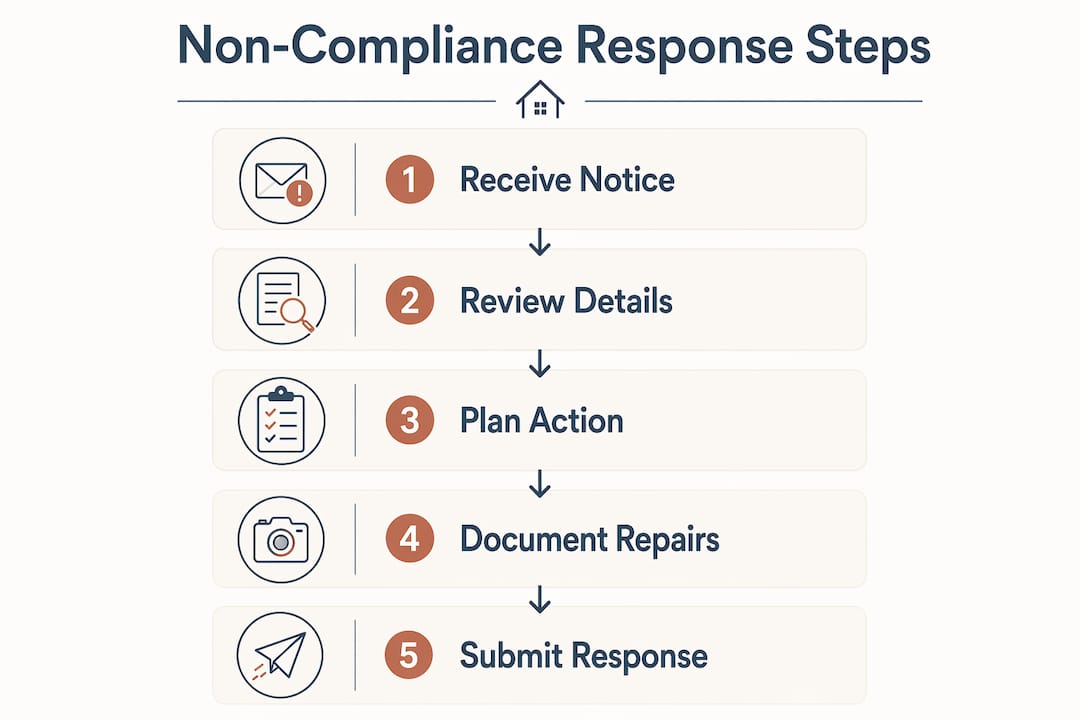
The procedural sequence following a notice is more structured than most property owners realize. Here is the typical progression:
- Receipt and review period: You receive the notice and have a short window, often 3 to 10 days, to review its contents, verify the alleged violation, and determine your response strategy.
- Correction or remediation: You address the violation directly within the cure period. This might mean hiring a licensed contractor, removing an unapproved structure, or scheduling a required inspection.
- Notification of correction: You notify the issuing authority that the violation has been corrected, typically in writing, and request a re-inspection or confirmation of compliance.
- Appeal filing (if contesting): If you believe the notice is inaccurate or procedurally defective, you file an administrative appeal. Appeal windows can be as short as 21 days, and missing that deadline makes the notice final and enforceable with no further recourse.
- Escalation for non-action: If you neither correct the violation nor appeal within the cure period, the issuing authority proceeds to enforcement. This means fines, liens, mandatory hearings, or legal action depending on the jurisdiction.
The financial stakes of ignoring a notice are severe. Daily civil penalties in U.S. jurisdictions commonly run $100 to $500 per day, and city fines for repeat violations can reach $34,000. Those numbers accumulate faster than most owners anticipate. A 60-day delay on a $200 per day fine generates $12,000 in liability before a single repair is made.
Pro Tip: *Document every step of your remediation process with dated photographs, contractor invoices, and written communications. This paper trail is your primary defense if the issuing authority disputes whether corrections were made on time.*
The consequences of property non-compliance extend beyond fines. Unresolved notices can cloud a property title, complicate refinancing, and appear in disclosure requirements during a sale. Buyers and lenders both conduct compliance searches, and an open enforcement action can kill a transaction.
How to respond effectively to a non-compliance notice
Receiving a notice does not mean you are guilty of a violation. A notice is a preliminary administrative step, not a final finding, and a careful review of its contents often reveals opportunities to correct, negotiate, or challenge the notice before enforcement begins.
Follow these steps to protect your position:
- Read the notice in full before reacting. Confirm the property address, the specific violation cited, the code section referenced, the required corrective action, and the cure deadline. Errors in any of these elements can be grounds for a procedural challenge.
- Verify the alleged violation independently. Walk the property, review your HOA documents or local code, and determine whether the violation is accurate. Notices are sometimes issued based on neighbor complaints or visual inspections that miss context.
- Consult a compliance professional or attorney early. For notices involving significant financial exposure or complex legal questions, a real estate attorney or licensed code compliance consultant can identify defenses and negotiate extensions that you would not find on your own.
- Engage a licensed contractor immediately if repairs are needed. Getting a contractor on record, even before work begins, demonstrates good faith and can support a request for a deadline extension.
- Build your paper trail from day one. Log every phone call with dates and names, send follow-up emails confirming verbal conversations, and keep copies of all correspondence. Documenting every attempt to gain inspection access or complete repairs is critical proof of due diligence.
- Never miss a deadline without written confirmation of an extension. Deadlines in enforcement notices are firm cutoffs, not soft targets. If you need more time, request an extension in writing before the deadline passes.
Pro Tip: *If you plan to appeal, review the HOA appeal process guide before drafting your letter. A procedurally defective appeal is often worse than no appeal at all because it can waive rights you did not know you had.*
One common pitfall is the last-minute fix. Completing repairs on the final day of the cure period leaves no time to document completion, schedule a re-inspection, or address any follow-up questions from the enforcement authority. Aim to complete corrections with at least three to five business days remaining in the cure period.
How do HOA, municipal, and contractor notices compare?
Not all non-compliance notices carry the same weight or follow the same procedures. The context in which a notice is issued determines the enforcement mechanism, the appeal path, and the realistic consequences.
| Notice type | Issuing authority | Typical cure period | Enforcement mechanism | Appeal path |
|---|---|---|---|---|
| HOA violation notice | HOA board or management company | 14 to 30 days | Fines, hearing, lien on property | Internal HOA hearing, then civil court |
| Municipal code enforcement notice | City or county code enforcement | 10 to 30 days | Daily fines, mandatory repairs, condemnation | Administrative appeal board |
| Construction contract notice | Property owner or developer | 3 to 14 days | Contract termination, withholding payment | Contract dispute resolution or arbitration |
| State agency inspection notice | State licensing or safety board | 30 to 90 days | License suspension, mandatory closure | Administrative law judge hearing |
HOA violation notices are the most common type property owners encounter. They carry contractual rather than statutory force, which means the HOA's ability to fine or lien depends entirely on what the CC&Rs and state HOA statutes authorize. Florida's Chapter 720 and Chapter 718, for example, set specific procedural requirements for HOA violation notices that boards must follow precisely or risk having their enforcement actions invalidated. You can review Florida-specific HOA compliance rules to understand how those requirements apply to your situation.
Municipal code enforcement notices carry statutory authority and tend to have shorter appeal windows and harder financial consequences. Most enforcement agencies use an education-based compliance model that achieves roughly a 92% compliance rate before formal penalties are imposed. That statistic matters because it means the agency's default preference is resolution, not punishment. Engaging cooperatively and early almost always produces a better outcome than ignoring the notice or taking an adversarial posture from the start.
Key takeaways
A notice of non-compliance is a preliminary enforcement tool, not a final penalty, and your response within the cure period determines whether the matter resolves cheaply or escalates into serious financial and legal liability.
| Point | Details |
|---|---|
| Definition is precise | A notice of non-compliance is a formal written document citing a specific legal or contractual failure with a defined cure period. |
| Cure periods are firm | Deadlines of 3 to 30 days are not soft targets; missing them triggers daily fines of $100 to $500 or more. |
| Documentation is your defense | A robust paper trail of repairs, communications, and access attempts is the primary protection against escalating penalties. |
| Context shapes strategy | HOA, municipal, and contractor notices each have distinct enforcement mechanisms and appeal paths requiring different response strategies. |
| Early engagement wins | The 92% voluntary compliance rate proves that cooperative, prompt responses resolve most notices before formal penalties begin. |
Why most property owners misread these notices and pay for it
I have reviewed hundreds of enforcement situations, and the single most expensive mistake property owners make is treating a notice of non-compliance as either a catastrophe or a nuisance. Both reactions lead to the same outcome: missed deadlines and avoidable costs.
The catastrophe reaction produces paralysis. Owners call attorneys, wait for advice, and let the cure period expire while they are still deciding what to do. The nuisance reaction produces procrastination. Owners assume the agency will not follow through, make a half-hearted repair attempt on the last day, and then discover the re-inspection failed because the work was incomplete.
What actually works is treating the notice as a project with a hard deadline. Read it the day you receive it. Identify the specific violation and the specific corrective action. Contact the issuing authority within 48 hours to confirm your understanding of what is required. Get a contractor or compliance professional engaged within the first week. Then document everything.
The compliance landscape is shifting toward continuous accountability, and agencies are investing more in enforcement infrastructure. The days of informal resolution through a phone call are not gone, but they are less reliable than they were a decade ago. A written record of your good-faith efforts now carries more weight than a verbal assurance ever did.
One more thing worth saying directly: most notices are resolved without fines. The education-based compliance model that most agencies use is designed to get properties into compliance, not to generate revenue. If you engage promptly, communicate clearly, and document your actions, you are already ahead of the majority of recipients who do nothing until the deadline passes.
> *— Blake*
How Hoaletterai helps you respond to non-compliance notices
Drafting a response to a non-compliance notice under deadline pressure is where most property owners make avoidable errors: wrong tone, missing required language, or no documentation of the response itself.

Hoaletterai solves that problem directly. The platform generates state-compliant violation response letters in minutes, with customizable fields for your specific violation, community rules, and state-specific statutory language. Board members can issue fine notices through the HOA fine notice template, while homeowners can draft appeal letters with built-in formatting checks that catch common errors before the letter goes out. USPS mailing is available directly through the platform, creating a delivery record that strengthens your paper trail. When a deadline is approaching, Hoaletterai removes the friction between knowing what to write and getting it sent.
FAQ
What is a notice of non-compliance in property?
A notice of non-compliance is a formal written document notifying a property owner, tenant, or contractor that a specific legal, contractual, or regulatory obligation has not been met, with a defined cure period to correct the violation before enforcement begins. Cure periods typically range from 3 to 30 days depending on the jurisdiction and type of violation.
What happens if you ignore a non-compliance notice?
Ignoring a notice allows the issuing authority to proceed with enforcement, which can include daily fines of $100 to $500, property liens, mandatory hearings, or legal action. Penalties accumulate rapidly and can far exceed the original cost of correcting the violation.
Can you appeal a notice of non-compliance?
Yes, most notices include an appeal process, but appeal windows can be as short as 21 days. Missing the appeal deadline makes the notice final and enforceable, so filing promptly and correctly is critical. Review the HOA fine appeal guide for a structured approach to contesting HOA-issued notices.
How is an HOA violation notice different from a municipal code notice?
An HOA violation notice carries contractual force under the community's CC&Rs and is enforced through fines, hearings, and property liens authorized by state HOA statutes. A municipal code enforcement notice carries statutory authority from city or county government and can result in mandatory repairs, daily civil penalties, or in severe cases, condemnation.
How do you document compliance after receiving a notice?
Photograph the violation before and after correction, retain all contractor invoices and work orders, and send written confirmation of completion to the issuing authority. Keeping a dated log of every communication with the enforcement agency or HOA board creates the paper trail that protects you if the matter is disputed later.
Recommended
- New York HOA & Co-op Compliance Guide: Violation Letters and Enforcement | HOA Letter AI
- Florida HOA Compliance Guide: Violation Letters Under Chapter 720 & 718 | HOA Letter AI
- HOA Warning Letter Template — Courtesy Notice Before Fines | HOA Letter AI
- HOA Violation Notice Checklist for Board Members | HOA Letter AI