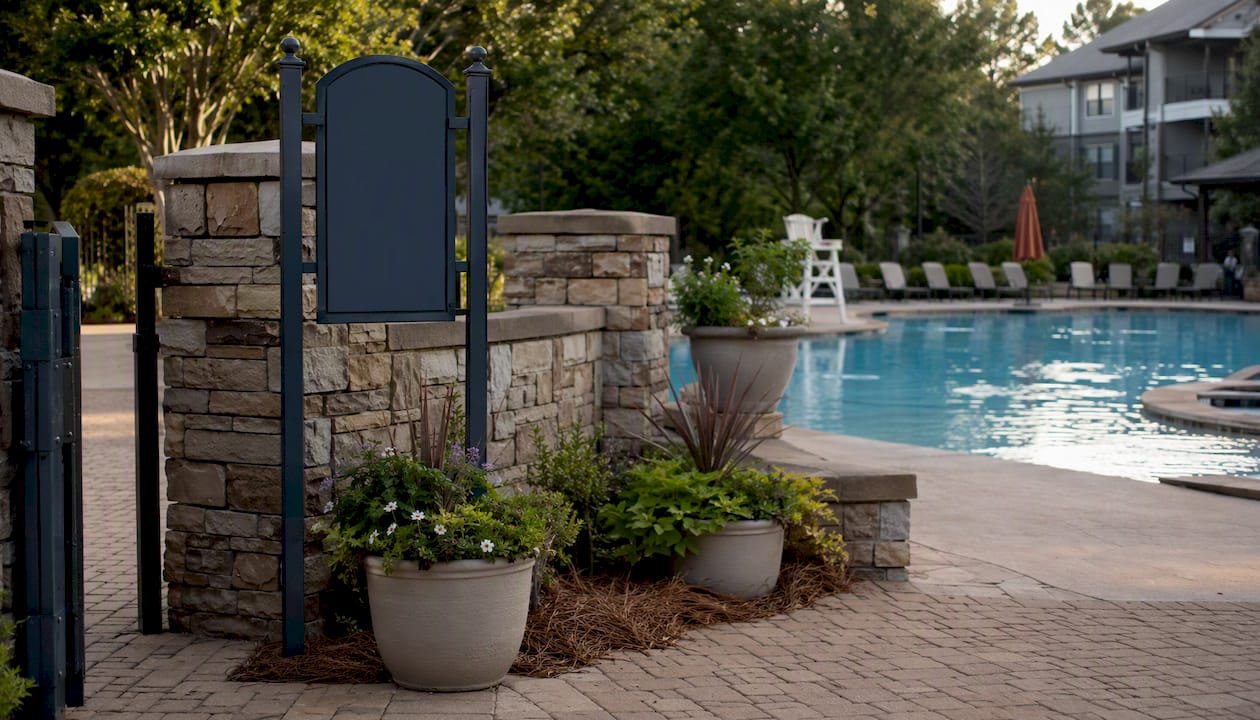
If you’re dealing with a pool rules violation, send a short, rule-cited notice that names the exact infraction, quotes the governing document section, and gives a clear cure-by date. Here’s a ready snippet: Subject: Notice of Pool Rules Violation, [Property Address]. “On [date/time], [violation observed, e.g., glass containers at the pool] was noted in violation of Section [X] of the Community Pool Rules. Please correct this by [cure date]. Contact the office with questions.” Once it’s drafted, send it by certified mail or upload it to your HOA management portal and log the delivery date, because that record is what protects the board if the matter ever reaches a hearing or a fine.
That’s the whole job in one paragraph. Everything below fills in the details: full templates for each stage of enforcement, the legal boxes a notice has to check, how to word things so residents actually comply instead of digging in, and when to call a lawyer instead of writing another letter.
Key Takeaways
A pool rules violation HOA letter works best when it pairs objective evidence with a specific rule citation, a firm cure-by date, and clear hearing rights, sent through a delivery method that proves receipt.
| Point | Details |
|---|---|
| Cite the exact rule | Quote the specific CC&R or pool rules section, not a paraphrase of the general policy. |
| Attach evidence every time | Include timestamped photos, an inspection log entry, and the posted signage reference. |
| Set a realistic cure-by date | Match the window to violation severity, from 3 days for safety hazards to 30 for minor issues. |
| Use certified mail before fines | Switch to certified mail with return receipt once a fine or hearing is possible. |
| Log every step | Record delivery dates, tracking numbers, and homeowner replies in a shared association file. |
| Run a state-compliance check first | Verify notice language and timing against your state and CC&Rs, or generate it directly with HOA Letter AI’s state-aware templates. |
Table of Contents
- Three Ready-to-Send Pool Violation Letter Templates
- What Must a Pool Violation Letter Contain to Hold Up?
- How Should a Pool Violation Notice Be Worded?
- Delivery Methods, Timing, and Cure Periods
- Confirm Your Notice Meets State and Association Requirements
- How to Document Evidence for a Pool Rule Violation
- When Does a Notice Escalate to a Hearing or a Fine?
- Sample Homeowner Response Templates
- When Should an HOA Call a Lawyer Instead of Writing Another Letter?
- Get Ahead of Pool Season Before the First Complaint Comes In
- How HOA Letter AI Speeds Up Pool Violation Notices
- Primary Resources for HOA Pool Enforcement
- Sources
Three Ready-to-Send Pool Violation Letter Templates
Every HOA enforcement letter follows the same escalation logic: a friendly first ask, a firmer second ask, then a final notice that spells out consequences. Below are three templates built specifically around pool rule infractions, not generic property violations. Swap in your community’s rule numbers, dates, and signage references.
-
Initial Notice (Educational Tone). Subject line: “Friendly Reminder: Pool Rules Compliance Needed.” Body: “Dear [Homeowner Name], On [date] at approximately [time], [staff member/board member name] observed [specific violation, e.g., unsupervised children under 12 in the pool area] at the community pool, contrary to Section [X] of the Pool Rules & Regulations, which is posted at the pool entrance and included in your governing documents. We ask that you review the attached rule excerpt and ensure compliance going forward. No action is required beyond your acknowledgment, but repeat violations may result in further notice per our enforcement policy. Photos are attached for reference. Thank you for helping keep our pool safe for everyone. Sincerely, [Board/Management Contact], [Community Name] HOA.”
-
Second Notice (Firm but Constructive). Subject line: “Second Notice: Pool Rules Violation, Action Required by [Date].” Body: “Dear [Homeowner Name], This is a follow-up to our notice dated [date] regarding [violation]. On [second date], the same or a related violation of Section [X] was again observed. Per our governing documents, you have until [cure-by date] to correct this issue. If you believe this notice was issued in error, you have the right to request a hearing before the board within [X] days of this letter; instructions are enclosed. Continued noncompliance may result in a fine per our published enforcement policy, or suspension of pool privileges. We would rather resolve this without further escalation. Please contact [name/phone/email] with questions.”
-
Final Notice Before Fines or Hearing. Subject line: “Final Notice: Hearing Scheduled for [Date] Regarding Pool Rules Violation.” Body: “Dear [Homeowner Name], Despite prior notices dated [dates], the violation of Section [X] of the Pool Rules remains uncured as of [date]. A hearing before the Board of Directors has been scheduled for [date, time, location or video link] to address this matter, in accordance with [Article/Section] of the Bylaws. You may attend, submit written evidence, or send a representative. If the violation is not resolved or a satisfactory explanation is not provided, the board may impose a fine and/or suspend pool access privileges effective [date]. Please respond by [RSVP date] to confirm attendance.”
Every version should close with a compact signature block: name, title, association name, and a direct contact method. Attach the specific pool rule excerpt, a dated photo, and any inspection log entry that documents the incident. A free HOA violation letter template can save you from rebuilding this structure from scratch every time a new infraction comes in.
What Must a Pool Violation Letter Contain to Hold Up?
A pool rules violation HOA letter is only as strong as its documentation. Skip a required element and the notice becomes easy to dispute at a hearing, or worse, unenforceable if it ever lands in front of a judge.
Subject line and purpose statement. Open with something unambiguous: “Notice of Violation, Pool Rules.” The homeowner should know within one sentence what this letter is and why they received it.
Objective description with date, time, and observer. Vague language like “residents have complained about pool behavior” invites a dispute. Specific language like “on Saturday, June 14, at 4:15 PM, the pool monitor observed six guests in the pool area, exceeding the two-guest-per-household limit” does not.
Exact citation of the governing document. Quote the section, not just the topic. A government-style structure, like the one used in St. Louis County’s sample violation letter, pairs the observed fact with a direct reference to the rule that was broken. That pairing is what makes a notice defensible.
Requested corrective action and cure-by date. Tell the homeowner exactly what “fixed” looks like and by when. “Discontinue bringing glass containers to the pool area” is clear. “Please be more careful” is not.
Hearing rights. Most state statutes and CC&Rs require you to tell homeowners they can request a hearing before a fine takes effect. Skipping this line is one of the most common reasons fines get overturned later.
Consequences for noncompliance. Reference your published fine schedule or enforcement policy by name, not just a dollar figure pulled out of the air.
The posted rule itself, attached. A photo of the actual signage at the pool, or the relevant page from your pool rules PDF, shows the homeowner (and any future hearing panel) that the rule wasn’t invented after the fact. Effective letters cite the specific section, state a cure period, and explain hearing rights clearly, according to MoneyMinder’s guidance on HOA violation letters, and that combination is what separates a letter that resolves the issue from one that triggers a grievance.
How Should a Pool Violation Notice Be Worded?
Tone decides whether a homeowner cures the violation quietly or calls a lawyer. A respectful, objective letter is more likely to produce voluntary compliance than one that reads like a threat, according to Don Asher’s analysis of HOA enforcement letters. The goal isn’t to win an argument. It’s to get the pool gate locked properly by Friday.
- Open with a neutral salutation and a purpose line, not an accusation: “We’re writing to let you know about an observation at the pool,” not “You have violated community rules.”
- State facts with timestamps and avoid hearsay: write what was directly observed, not what “several neighbors reported.”
- Briefly explain the why behind the rule. Referencing supervision requirements, capacity limits, or the glass ban as safety measures, not arbitrary restrictions, tends to improve compliance, a pattern echoed in RISE’s rundown of essential HOA pool rules.
- Use “do” language over “don’t” language where possible: “Please keep guest counts at two per household” reads better than “Do not exceed the guest limit.”
- Offer a contact point for questions in every letter, even the final notice. It signals the board is willing to resolve the matter, not just punish it.
Reserve a more formal tone for repeat violations or genuine safety hazards, like an unsupervised toddler near the deep end or a broken gate latch. First-time, minor issues, like a stray pool toy left on the deck, warrant an educational tone and a light touch. Matching the register to the severity keeps your enforcement pattern consistent and easier to defend if a homeowner challenges it later.
Delivery Methods, Timing, and Cure Periods
How you deliver a pool rules violation HOA letter matters almost as much as what it says. Certified mail with return receipt is the gold standard when a fine or suspension might follow, because it creates a paper trail proving the homeowner received notice on a specific date. First-class mail works for low-stakes courtesy notices. Hand delivery with a signed receipt is useful for on-site management teams. Posting at the unit, per your governing documents, and email, where your CC&Rs or state law explicitly allow it, round out the acceptable methods, but always confirm your Declaration’s specific requirements before relying on email alone.
Cure periods vary by how serious the violation is. Many template libraries and enforcement guides recommend windows between 7 and 30 days depending on severity, according to Zorex HOA’s violation letter resources.
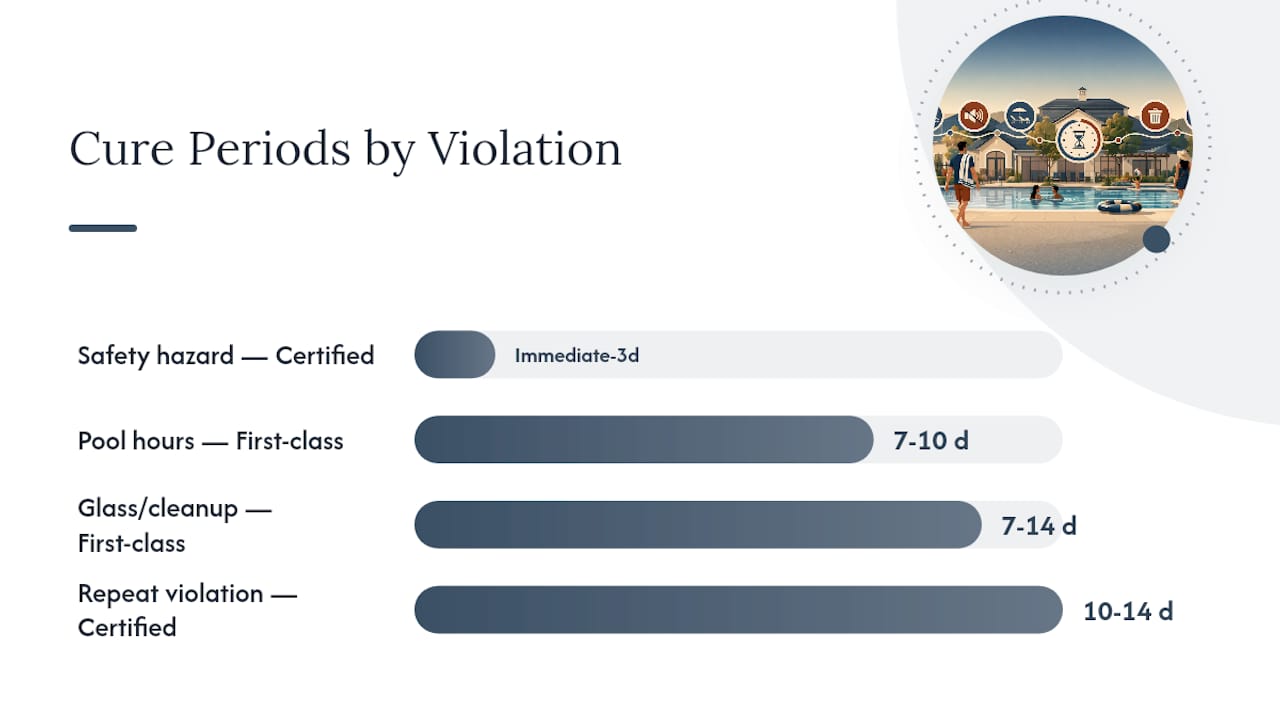
| Violation Type | Recommended Cure Period | Preferred Delivery Method |
|---|---|---|
| Safety hazard (broken gate latch, missing supervision) | Immediate to 3 days | Certified mail plus phone call or in-person notice |
| Pool hours or guest limit violation | 7 to 10 days | First-class mail or certified mail if repeat offense |
| Glass container or clean-up violation | 7 to 14 days | First-class mail |
| Repeat violation heading toward a fine | 10 to 14 days before hearing notice | Certified mail with return receipt |
Log every delivery: date sent, method, tracking number, and who mailed it. A simple spreadsheet with columns for homeowner name, violation date, notice stage, delivery method, and tracking number turns a scattered filing cabinet into a defensible enforcement record.
Pro Tip: Keep a dedicated folder, digital or physical, per address, and drop the certified mail receipt directly into it the same day you send the letter. Boards that wait a week to file paperwork are the ones who can’t find the tracking number when a homeowner disputes the fine six months later.
Confirm Your Notice Meets State and Association Requirements
Before you send anything, run through a short compliance check. State statutes and your own CC&Rs both set floors you cannot go below, even if your board wants a tougher rule.
- Confirm the required delivery method: some states mandate certified mail for any notice tied to a fine over a certain dollar amount.
- Confirm the cure period matches your Declaration and any state minimum, not just your internal preference.
- Confirm the letter states hearing rights in the exact language (or close to it) that your Bylaws require.
- Quote the governing document section verbatim rather than paraphrasing; a paraphrase invites an argument about what the rule “really” says.
- When in doubt, check your state’s statute pages or call HOA legal counsel rather than guessing. HOA rules can be more restrictive than state law, but they cannot dip below state or federal minimums, such as 48-inch pool barriers and VGB-compliant drain covers, as Florida’s Best Pool Service explains in its breakdown of Florida HOA pool rules.
- Review posted pool signage before the season starts. Signage sometimes changes year to year, and a notice that cites an outdated rule number undermines the whole letter, a point PoolManagementInc raises directly in its pre-season safety checklist.
State requirements for notice timing, fine caps, and hearing procedures differ enough from state to state that a template built for one association rarely transfers cleanly to another. HOA Letter AI’s state law guide tracks these requirements and generates notices that already account for your state’s specific rules, which removes a lot of the guesswork boards otherwise do manually.
How to Document Evidence for a Pool Rule Violation
A notice without evidence is an opinion. A notice with a timestamped photo, an inspection log entry, and a witness name is a fact pattern.
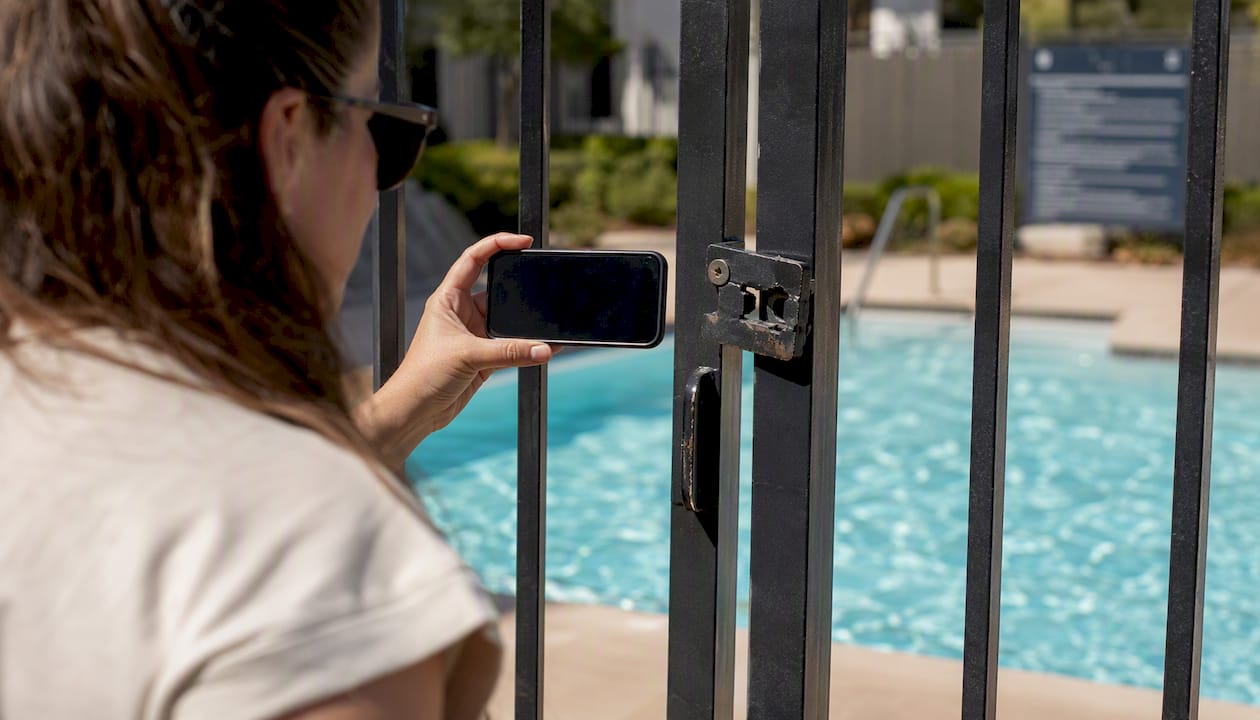
Photos. Take multiple angles: one close-up of the specific issue (glass bottle, unlocked gate, unsupervised child), and one wide shot showing context, like the posted rules sign in the same frame. Make sure your camera or phone’s timestamp is on or visible in the metadata, and name files consistently, something like 2026-06-14_pool_glass_violation_unit204.jpg beats “IMG_4471.jpg” when you’re pulling records for a hearing eight months later.
Inspection logs. A simple log entry needs four fields: who observed it, when, what exactly was seen, and whether a witness was present. “6/14/26, 4:15 PM, pool monitor J. Ramirez, six guests in pool exceeding two-guest limit at unit 204, no witness” is a complete, usable entry.
Signage reference. Photograph the posted pool rules sign itself, ideally the same week you issue any notice that cites it. This directly supports the letter’s citation and shows the rule was visible and current at the time of the violation.
Attachment checklist. Every notice benefits from: the photo evidence, the relevant inspection log excerpt, copies of any prior notices sent to that address, and, where applicable, gate access logs or lifeguard/staff incident reports.
Retention. Keep evidence for as long as your state’s record retention requirements dictate, and longer if a fine or suspension is contested. Store digital files in a shared drive the board and management company can both access, not on one person’s personal phone.
When Does a Notice Escalate to a Hearing or a Fine?
Enforcement works best as a predictable sequence, not a case-by-case judgment call. A typical flow looks like this: courtesy notice, formal notice with a defined cure period, final notice with a hearing date, the hearing itself, then enforcement action if the violation still isn’t cured.
Hearing notices need enough lead time for the homeowner to prepare, and many CC&Rs specify a minimum number of days, often 10 to 14, though this varies by state and by your Bylaws, so confirm your own document’s language rather than assuming. Sample hearing language: “A hearing before the Board of Directors is scheduled for [date] at [time] at [location/platform] to address the unresolved violation described in our notice dated [date]. You may present evidence or a written statement.”
Fine notices carry more weight when they reference your association’s published fine schedule directly: “Per Section [X] of the Enforcement Policy, a fine has been assessed effective [date].” Boards that skip this reference and just state a number invite a challenge that the fine was arbitrary.
Consistency is what protects the board legally and reputationally. Document every step for every resident the same way, and apply the same cure periods and fine amounts across the community for comparable violations. If one homeowner gets 30 days and another gets 7 for the identical infraction, that inconsistency becomes the homeowner’s best argument at a hearing.
There’s also a case for pausing enforcement: if a homeowner has filed an ARC application, is actively fixing a hazard, or has documented a partial cure, note that in the file and consider extending the cure date rather than pushing straight to a fine. A partial cure, like removing glass containers but still needing to address a supervision issue, should be documented as such, not treated as a full resolution or a total failure.
Sample Homeowner Response Templates
Homeowners need a way to respond that doesn’t require a lawyer, and boards need a fast, consistent way to reply. These templates cover the most common exchanges.
-
Homeowner acknowledgement. “Dear [Board/Management], I received your notice dated [date] regarding [violation]. I plan to correct this by [date] and will confirm once complete. Please let me know if you need anything further from me.” This should trigger a short board reply confirming receipt and the agreed cure date.
-
Homeowner dispute request. “Dear [Board/Management], I am writing to request a hearing regarding the notice dated [date]. I believe this notice was issued in error because [brief explanation], and I have attached [photos/witness statement] as supporting evidence. Please confirm a hearing date at your earliest convenience.” Log this request immediately and route it to whoever schedules hearings.
-
Board response scheduling a hearing. “Dear [Homeowner], We have received your hearing request dated [date] and have scheduled your hearing for [date, time, location]. Please bring any supporting documentation you’d like the board to review.”
-
Board response confirming a cure. “Dear [Homeowner], Thank you for the photo documentation submitted on [date] confirming correction of the violation described in our notice dated [date]. This matter is now closed in our records. We appreciate your prompt attention.” Accepting a photo or an inspection confirmation as proof of cure, and documenting that acceptance in writing, closes the loop and prevents the same issue from resurfacing as a dispute months later.
For related violation types where the response structure is nearly identical, boards often reuse the same framework. A trash violation response letter or a parking violation response letter follows the same acknowledgment-and-cure logic, just with different rule citations.
When Should an HOA Call a Lawyer Instead of Writing Another Letter?
Most pool rule violations resolve with a notice and a cure. A few situations call for legal counsel before you send anything else.
Watch for ADA or Fair Housing Act red flags, particularly around supervision requirements or pool access restrictions that could disproportionately affect a resident with a disability. A request for an accommodation, like a modified supervision rule for a disabled adult resident, is not something to resolve with a standard enforcement letter. Threats of bodily harm, suspected criminal activity, or a pattern of safety violations that a homeowner refuses to correct despite multiple notices also warrant a call to counsel rather than a fourth letter.
State-law triggers matter too. If your state statute specifies notice timing or hearing procedures you haven’t been following, correct that with legal guidance before imposing a new fine, not after. And generally, before your board levies a new type of monetary fine for the first time or considers any physical self-help remedy, like changing pool access codes without notice, get counsel’s sign-off. The cost of a short consultation is far less than the cost of an unenforceable fine or a fair housing complaint. When documenting any of this correspondence for legal review, keep the letter itself, the date sent, and the recipient clearly noted in your files, since personal correspondence like these letters doesn’t follow standard citation formats and needs that context to be usable later, a point echoed in NCBI’s guidance on citing letters and personal communications.
Get Ahead of Pool Season Before the First Complaint Comes In
Most pool violation headaches are preventable, and the prevention step happens weeks before Memorial Day, not the day after the first complaint. Walk the pool deck before opening day and confirm the posted rules sign matches what’s actually in your current governing documents. Rules get updated during annual meetings and signage doesn’t always keep pace, and a notice that cites a section number that no longer matches the posted sign is an easy dispute to win for the homeowner.
Check vendor permits, lifeguard certifications if you use staffed lifeguards, and any recent ARC approvals for pool area modifications while you’re at it. A five-minute walkthrough in April saves a board from discovering in July that the “no glass” sign fell down last winter and was never replaced.
If there’s one habit worth building into your enforcement process, it’s this: gather the evidence and set a realistic cure date before you think about a fine. Boards that lead with punishment tend to spend more time in hearings and more money in legal fees than boards that lead with documentation and a fair timeline. The fine is a backstop, not the first move.
How HOA Letter AI Speeds Up Pool Violation Notices
Writing a defensible pool rules violation HOA letter from scratch, every time, for every violation type, eats hours a volunteer board or a stretched property manager doesn’t have. HOA Letter AI generates state-aware notices that already account for your state’s delivery, cure period, and hearing-rights requirements, pull in your community’s specific rule citations, and check for the mandatory language a notice needs before it goes out.
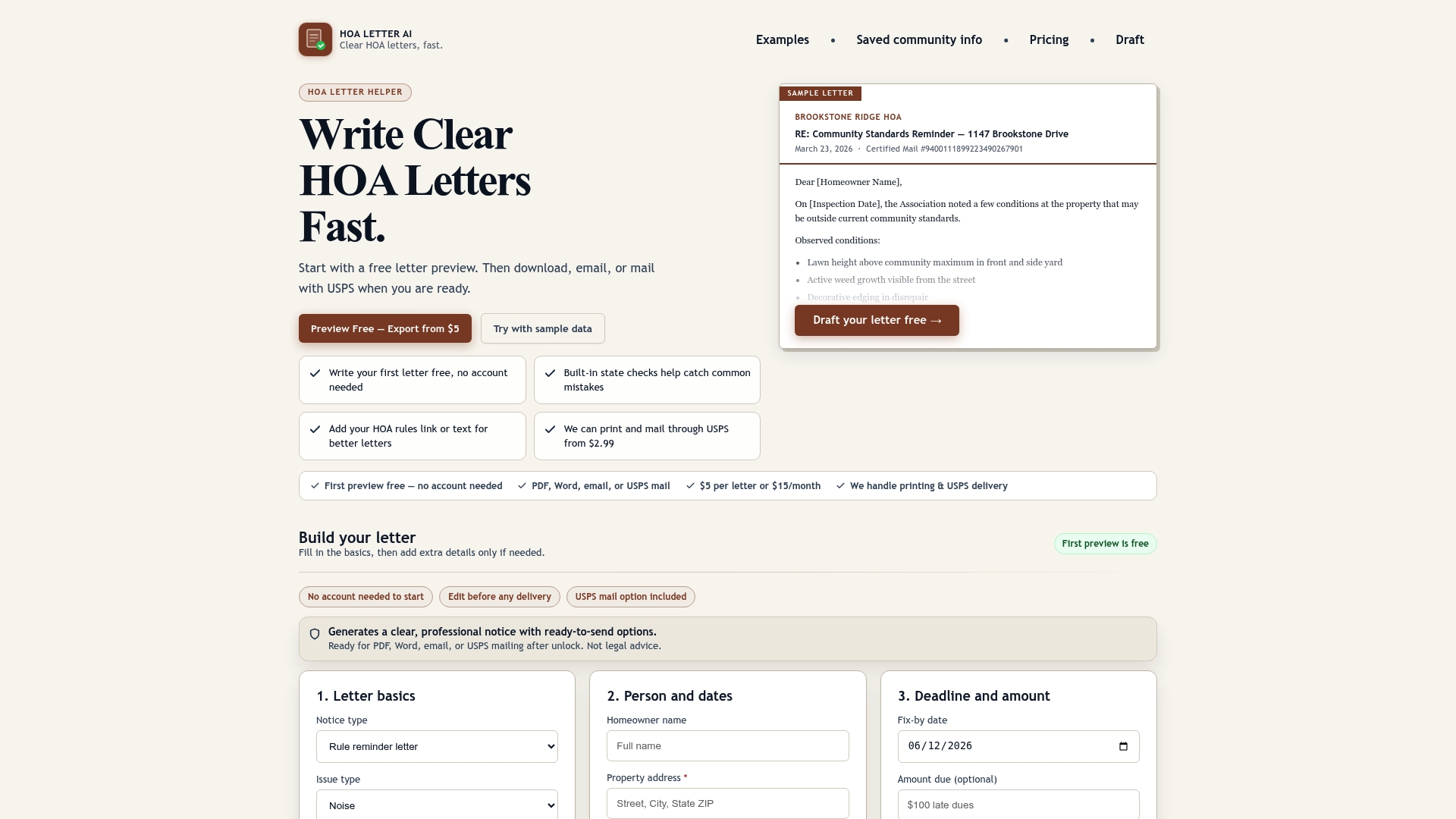
The workflow is straightforward: generate the letter using your community’s rule details, preview it on a single page to confirm the citation and cure date are correct, then send it through built-in USPS mail fulfillment or download it for your own certified mail process. Property management teams can save a reusable community profile so every future notice pulls the correct CC&R sections automatically instead of starting over each time. If your board wants a faster path to your first pool season notice, start with the HOA warning letter template built for exactly this kind of courtesy-notice-before-fines situation.
Primary Resources for HOA Pool Enforcement
Boards drafting their own pool rules violation HOA letters should keep a short list of primary sources on hand rather than relying on memory or last year’s template. The St. Louis County sample violation letter shows a clean, government-style structure worth borrowing from. MoneyMinder’s guide to HOA violation letters covers tone and required elements in more depth than most template libraries. For pool-specific safety boundaries, Florida’s Best Pool Service’s rundown of HOA pool rules explains where state and federal minimums override even the strictest HOA policy. A published community rules document, like the Longmeadow HOA pool rules PDF, is worth reviewing as an example of how a well-organized rules document supports enforcement letters down the line.
Before you issue a fine or take any action tied to a hearing, check your own state’s statute pages and your community’s current CC&Rs. This article offers general guidance, not legal advice, and rules on notice timing, hearing procedures, and fine limits vary enough by state that confirming your own governing documents with counsel is worth the time before your board acts on a pool rules violation.
Sources
- Citing Letters and Personal Communications guidance (NCBI Bookshelf)
- Sample Violation Letter from Homeowners Association (St. Louis County)
Recommended
- How to Write an HOA Violation Letter (With a Calm, Rule-Cited Example) | HOA Letter AI
- HOA Letter Guides — Violation Notices, State Compliance & Templates | HOA Letter AI
- Free HOA Letter Templates — Violation, Fine, Welcome & More | HOA Letter AI
- Free HOA Violation Letter Template (State-Aware Guardrails) | HOA Letter AI