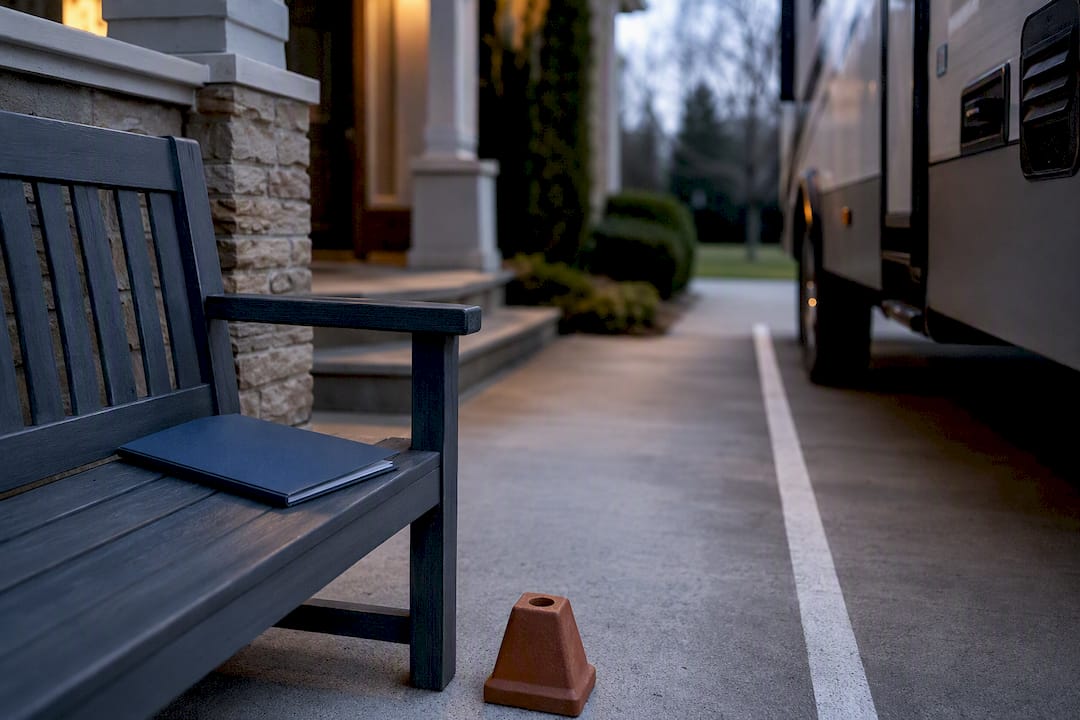
Send the initial compliance notice today, not a phone call or a verbal warning. Cite the exact CC&R or rule section, photograph the vehicle with the address visible, log the date and time, and give the homeowner a written deadline (7 to 14 days is standard for parking). Serve it by certified mail with a copy posted or emailed, and keep every record before you move to fines.
TL;DR:
- Ensure notices include the exact CC&R citation, objective description of the violation, and a measurable correction deadline of 7 to 14 days.
- Maintain detailed logs, timestamped photos, and proof of service to support enforcement actions and defend against appeals.
- Confirm the violation is in recorded rules, the vehicle is on HOA-controlled property, and enforcement has been consistent across similar cases.
- Follow a strict sequence of notices: initial, then fine notice, and finally a last warning with towing or lien options, escalating only if violations persist.
- Be aware of jurisdictional limits, especially on public streets or disability accommodations, and enforce rules respectfully to avoid legal or appeal challenges.
Table of Contents
- How Do You Write an RV Parking Violation HOA Letter?
- What Makes an RV Parking Violation Letter Enforceable?
- How Do You Document a Violation Before Sending the Notice?
- What Should You Confirm Before Sending the Letter?
- How Long Does an HOA Give You to Move an RV, and What Happens Next?
- What U.S. Legal Limits Apply to RV Parking Enforcement?
- What Board Members Get Wrong About RV Parking Enforcement
- Get State-Aware RV Parking Letters Without Starting From a Blank Page
- Sources
How Do You Write an RV Parking Violation HOA Letter?
A defensible RV parking violation HOA letter follows a strict progression: an initial notice, a second notice with fine language, and a final notice with consequence language. Each stage builds a paper trail. Skip a stage and you weaken your position if the homeowner appeals.
Initial Compliance Notice
This is factual and courteous, never accusatory. It should quote the CC&R section directly, describe what your inspector observed, and state a measurable fix with a deadline.
- State the violation: “[Vehicle type/plate] parked at [location] since [date]”
- Cite the rule: “This violates Section [X.X] of the CC&Rs, which prohibits RV parking in visible areas for more than [X] hours”
- Give the cure: “Please remove or relocate the vehicle to an approved area by [date, 7 to 14 days out]”
- Note consequences: “Failure to comply may result in fines as outlined in the Association’s enforcement policy”
Second Notice / Notice of Fine
If the vehicle is still there after the deadline, the second notice repeats the violation language, states the specific fine amount and the date it takes effect, and tells the homeowner how to request a hearing before the board.
Final Notice
The final notice states the last compliance date, spells out the exact consequence (towing at owner’s expense, a fine escalation, or a lien for unpaid balances), and explains the appeal or hearing process one more time. Boards can adapt a ready-made parking violation letter template for each of these three stages rather than drafting from scratch every time.
- Draft the initial notice using the CC&R citation and a 7 to 14 day cure window.
- If uncured, send the second notice with fine amount and hearing instructions.
- If still uncured, send the final notice with towing/lien language and a last appeal opportunity.
What Makes an RV Parking Violation Letter Enforceable?
An enforceable notice does five things without exception. Miss one, and a homeowner’s attorney has an opening.
- Exact citation. Quote the recorded CC&R section or board-adopted rule word for word, not a paraphrase. Template guidance is built around this exact-citation requirement, and vague references are the most common reason boards lose enforcement disputes.
- Objective description. Vehicle type, plate number if visible, precise location (street address, lot number, or GPS point), and the date and time observed.
- Measurable corrective action. “Remove the RV” is weak. “Remove or relocate the vehicle to an approved storage area by [date]” is not.
- Consequences and appeal rights. State what happens if the deadline passes, and tell the homeowner exactly how to request a hearing.
- Signature and proof of service. Name, title, and a line stating how the notice was delivered (certified mail, personal delivery, or email with read receipt).
Pro Tip: Keep a one-sentence “how served” line at the bottom of every letter. “This notice was sent via USPS certified mail on [date], receipt #[number].” That single line has saved boards from losing appeals over service disputes.
How Do You Document a Violation Before Sending the Notice?
Documentation is what separates a letter that holds up on appeal from one that gets thrown out.
- Log the observation: observer name and title, date, time, exact address or GPS point, and a plain description of what was seen.
- Take timestamped photos: one wide shot showing the vehicle and the house number, one close shot of the plate or unit identifier.
- Save originals with metadata intact rather than screenshots or cropped copies.
- Choose your service method: certified mail plus a posted copy is the safest combination, though personal delivery with a signed acknowledgment also works.
- File the receipt, photos, and log together, and retain them for at least as long as your state’s statute of limitations for HOA disputes (often several years).
Keeping inspection logs, timestamped photos, and delivery receipts on file is standard practice for countering selective-enforcement claims when a fine gets challenged.
What Should You Confirm Before Sending the Letter?
Before you mail anything, run through four checks that catch the mistakes that get enforcement actions overturned.
- Confirm the restriction is actually in the recorded CC&Rs or a properly adopted rule, and copy the exact wording into your draft.
- Check whether the vehicle sits on a public street rather than HOA-controlled private roads. Municipal parking allowances of 24 to 48 hours for loading or temporary stays can create a safe harbor your association cannot override.
- Pull your enforcement file and verify you’ve handled similar past violations the same way. Inconsistent enforcement is the single easiest argument a homeowner’s attorney can make.
- Note your association’s hearing and appeal steps, and flag any reasonable accommodation request tied to a disability before issuing a fine.
How Long Does an HOA Give You to Move an RV, and What Happens Next?
Cure periods vary by violation type, and your governing documents set the real number, but common practice leans toward 7 to 14 days for standard parking violations and 24 to 72 hours when the RV creates a safety or fire lane issue.
Fine progression typically runs courtesy notice, then a flat fine, then a daily fine, then an escalated penalty tied to your association’s fee schedule. Sample wording: “A fine of $[amount] will be assessed daily beginning [date] until the violation is cured.”
- Towing generally requires a board resolution, a signed vendor contract, and prior written notice to the homeowner.
- Placing a lien for unpaid fines needs documented notice history and often a specific number of missed payments under your state’s statute.
- Keep every escalation step on file. It’s what supports your position if the dispute lands in small claims court.
What U.S. Legal Limits Apply to RV Parking Enforcement?
HOA authority to restrict RV parking rests on three layers: the recorded CC&Rs, board-adopted rules, and whatever state or local statutes apply in your jurisdiction. Some states cap what HOAs can enforce, so check the recorded documents and your state’s HOA statute before you fine anyone.
- Public streets often fall outside HOA jurisdiction, even inside a gated community’s boundaries.
- A homeowner requesting an RV parking exception for disability-related needs may be entitled to reasonable accommodation under the Fair Housing Act, and boards should route that request through a documented accommodation process rather than issuing an immediate fine.
- Courts have upheld CC&R restrictions consistently when enforcement follows formal amendment and notice procedures, but not when a board tries to waive or selectively apply the rule.
When a case looks unusual or contested, document everything and loop in HOA counsel before your next letter goes out.
What Board Members Get Wrong About RV Parking Enforcement
Most enforcement failures aren’t legal, they’re tonal. Boards write accusatory letters when neutral, factual language gets better compliance and holds up better on appeal. State the rule, state what was observed, state the fix, state the date. Nothing else belongs in the letter.
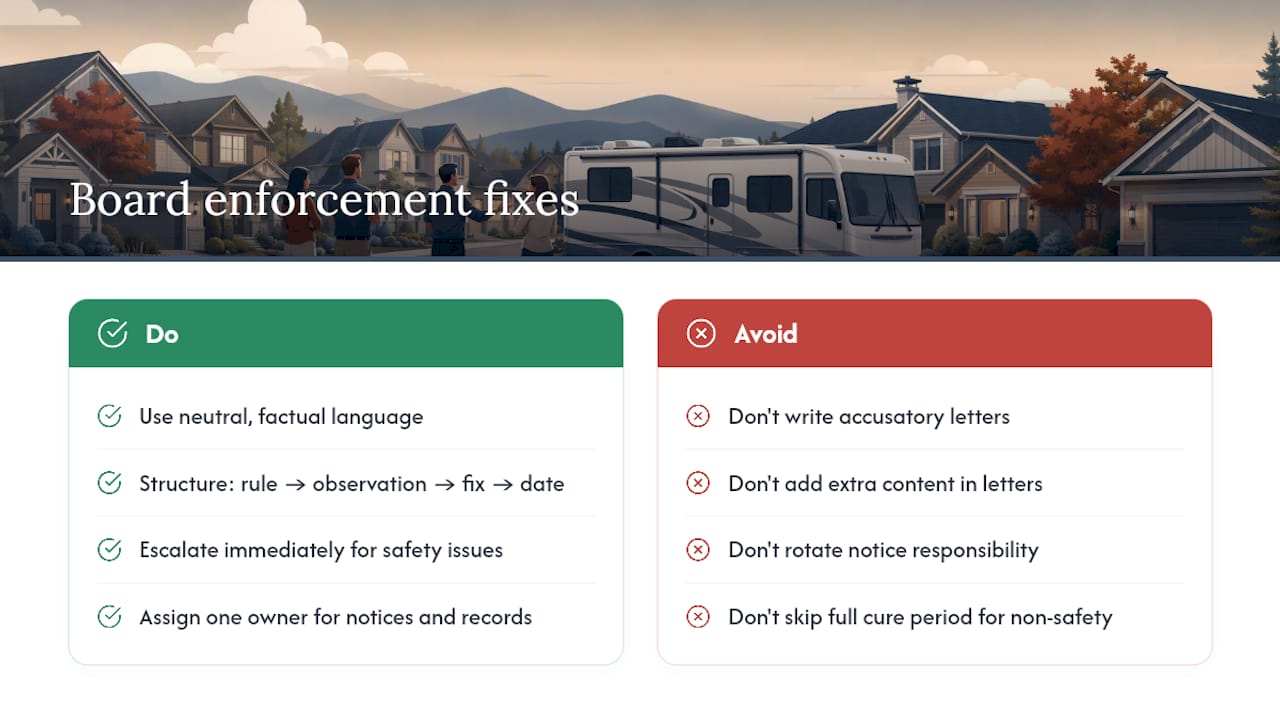
Safety issues are the exception to the go-slow approach. A generator running at night or an RV blocking a fire lane justifies immediate escalation, the way municipal nuisance enforcement treats similar complaints. Everything else deserves the full cure period, especially documented hardship requests.
One more thing worth fixing: assign one person or team to own every notice and every record. Boards that rotate this responsibility end up with inconsistent letters, which is exactly what fuels a selective-enforcement complaint.
— Blake
Get State-Aware RV Parking Letters Without Starting From a Blank Page
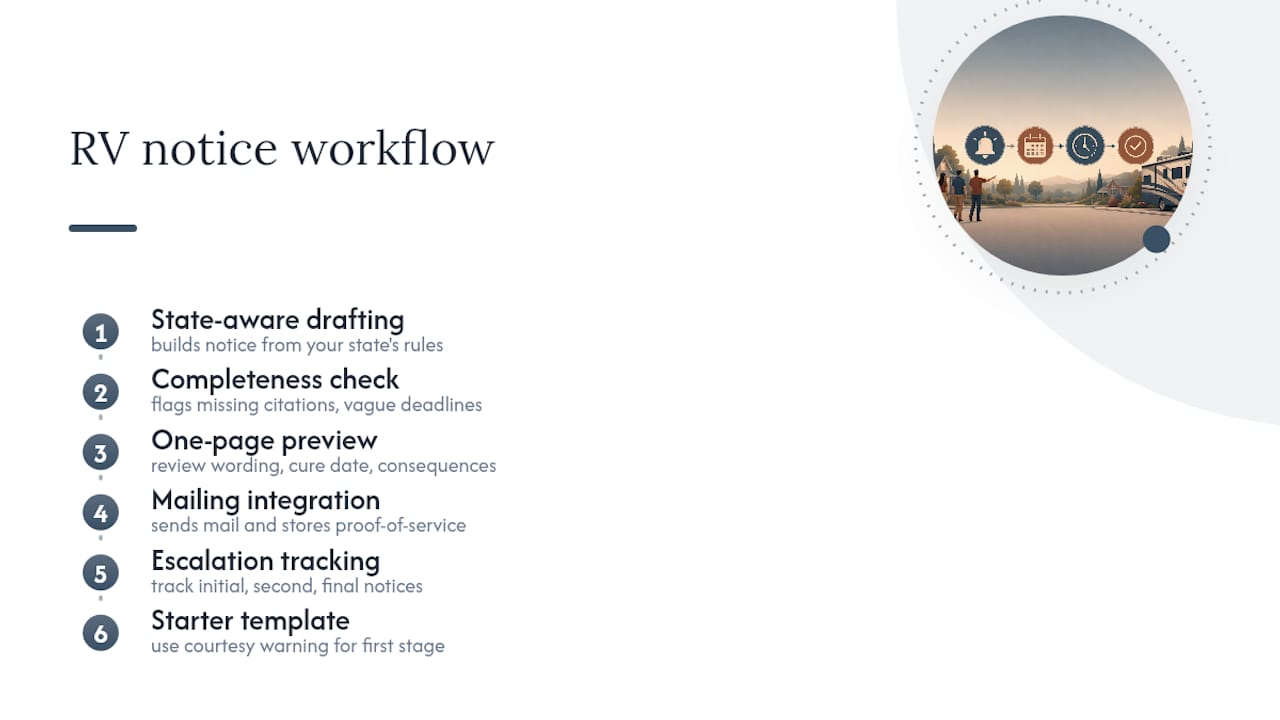
HOA Letter AI builds the notice around your state’s actual rules, not a generic template pulled from a rules binder ten years out of date. Every draft runs through a notice-completeness check that flags missing CC&R citations, vague deadlines, or absent consequence language before you send it, using the state-by-state notice and fine requirements your board actually operates under.
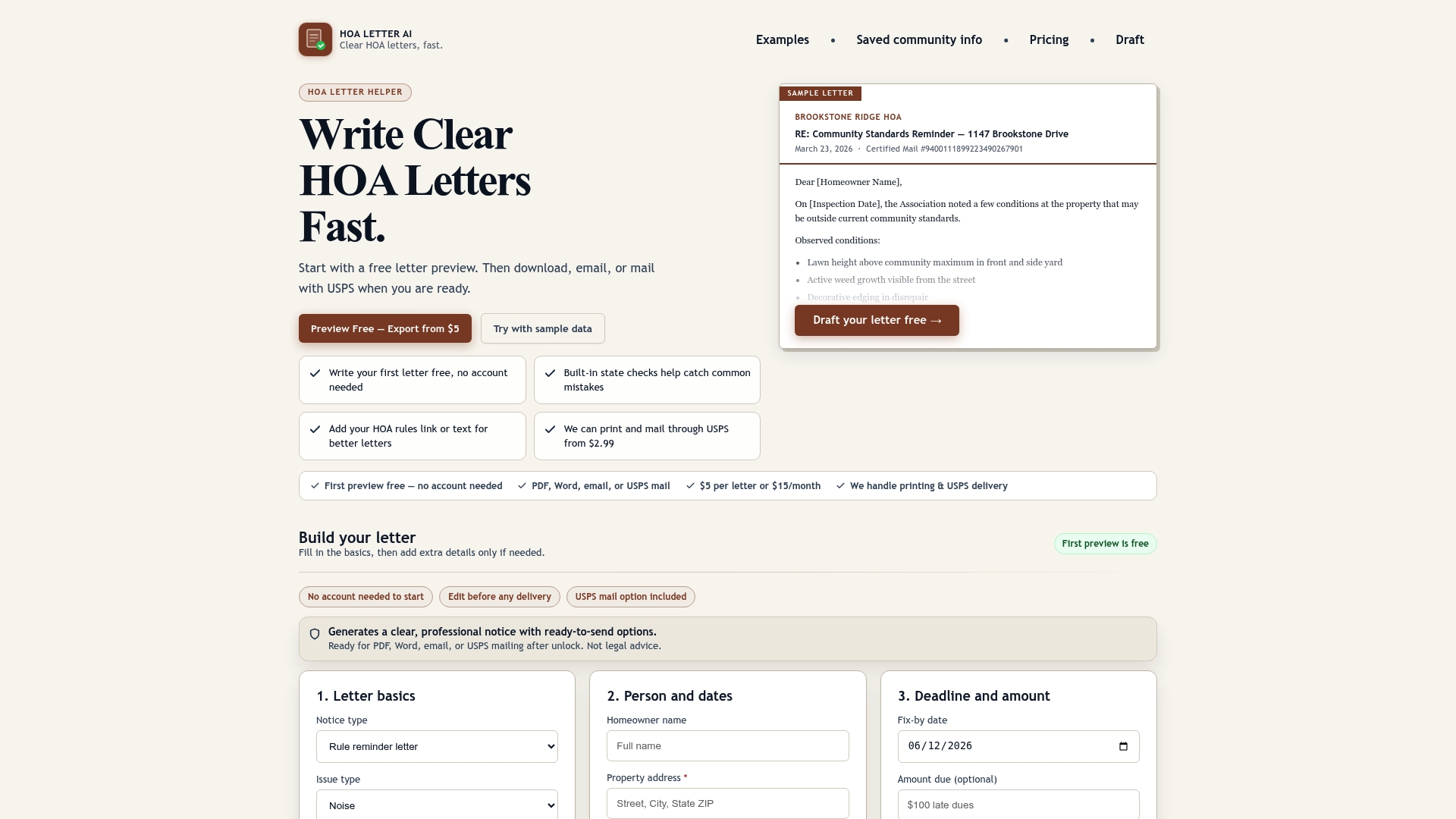
A one-page preview before sending allows review of the exact wording, the cure date, and the consequence language in one pass. Mailing integration can handle delivery and keep proof-of-service on file automatically, which matters if a homeowner disputes receipt. For boards handling repeat violations across a community, a system can track initial, second, and final notices so escalation stays consistent instead of improvised letter by letter.
Start with the courtesy warning letter template for a first-stage RV parking notice, or check your state’s specific fine and notice rules before drafting your next letter.
Sources
For deeper reading, the state-by-state notice and fine rules page covers requirements by jurisdiction, while the parking violation letter explainer walks through documentation standards in more detail. Homeowners responding to a notice can review a state-compliant response letter before their hearing date.
- HOA RV & Boat Parking Rules 2026 | HOA Help | Free HOA Legal Help
- Free HOA Violation Letter Template (Word Download) | Zorex
- Public maintenance/enforcement report — RV generator nuisance (San Diego)