
Organizational letter delivery confirmation is the use of verifiable mailing services and tracking systems to prove that specific letters or documents were sent and received by the intended party. For homeowners’ associations, property managers, and any organization that sends legal notices, this process is not optional. USPS Certified Mail is the recognized standard, offering a 20–22 digit tracking number, a formal acceptance scan, and a signature requirement upon delivery. Get any one of those steps wrong, and your proof of delivery may not hold up when it matters most.
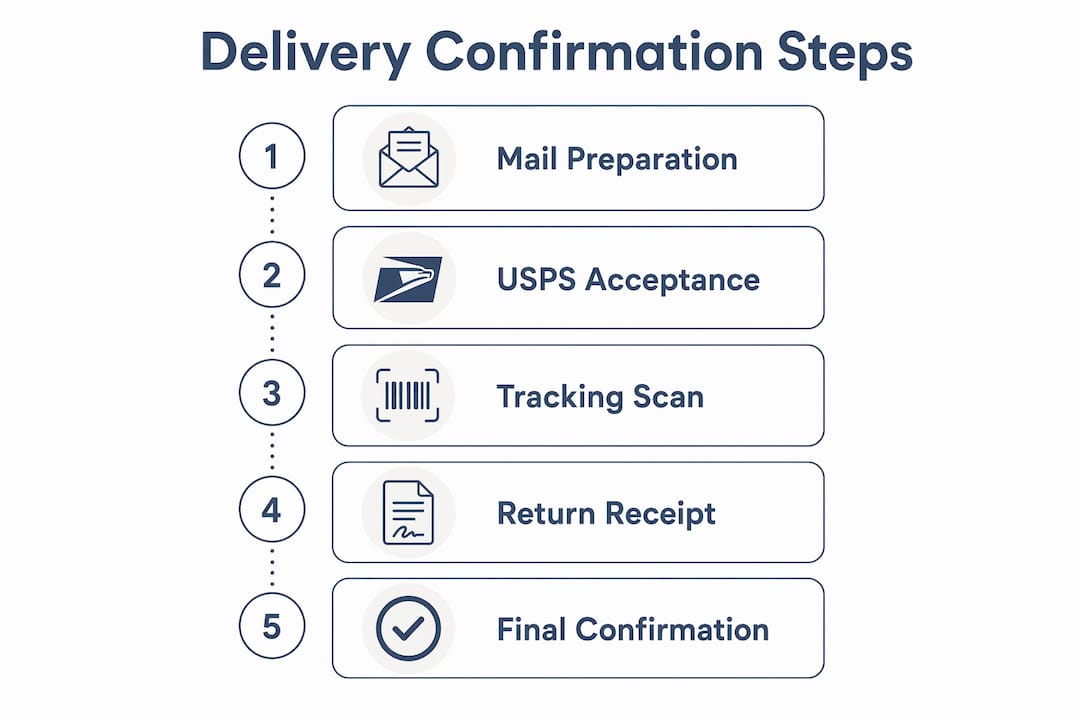
What is organizational letter delivery confirmation and why does it matter?
Delivery confirmation, in a formal organizational context, is the documented record that a specific piece of mail was accepted by the postal service, transported, and received by the addressee or an authorized party. The industry term for the full process is “proof of delivery,” and it carries real legal weight. Courts, arbitration panels, and regulatory agencies routinely rely on this documentation when disputes arise over whether a notice was properly served.
USPS Certified Mail is the standard for organizational letter delivery confirmation because it combines a mailing receipt, real-time tracking, and a delivery signature into one service. The fee runs about $5.30 on top of regular postage, which is a small cost compared to the legal exposure of an unverifiable notice. Every Certified Mail piece receives a unique 20–22 digit tracking number that ties the physical letter to a documented chain of custody.
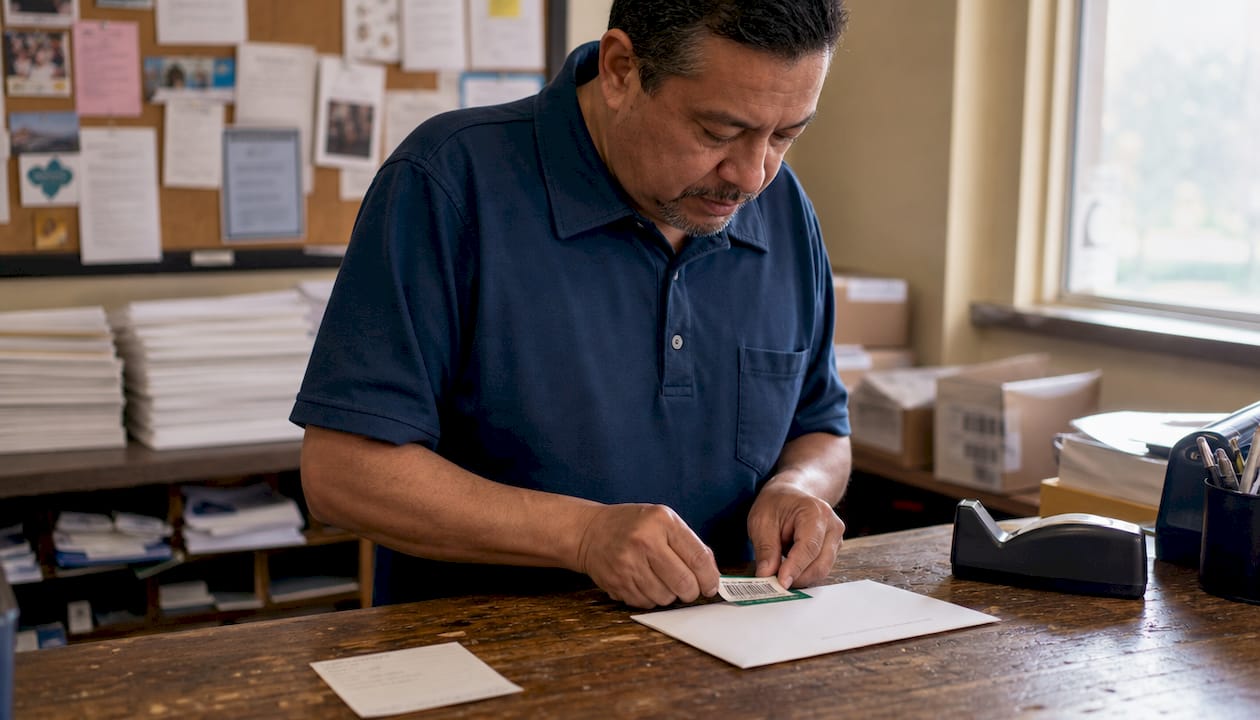
The importance of delivery confirmation goes beyond record-keeping. When an HOA sends a violation notice or a property manager issues a formal warning, the recipient’s right to respond depends on receiving proper notice. If delivery cannot be proven, the entire enforcement action can be challenged and reversed.
How does the USPS Certified Mail process confirm delivery?
The Certified Mail process follows a clear sequence, and each step builds the evidentiary record. Skipping or shortcutting any step weakens the proof.
- Prepare the letter and attach the Certified Mail label. Print or obtain PS Form 3800, which includes the barcode and tracking number. Attach it to the envelope before going to the post office.
- Hand the mail directly to a USPS clerk. This is the step most organizations get wrong. The acceptance scan at the counter is the legally critical proof of mailing date. Without it, you have no verified timestamp.
- Receive and secure PS Form 3800. The clerk stamps this receipt with the date. Losing it complicates proving the mailing date in any future dispute, so store it with the letter file immediately.
- Monitor tracking updates. USPS posts scan events from acceptance through final delivery, including transit scans, delivery attempts, and the delivery confirmation itself.
- Obtain the delivery signature. The carrier requires a signature at the door. That signed record becomes your primary proof that the letter reached the address.
Pro Tip: Request a Return Receipt (PS Form 3811) at the same time you mail the letter. The signed card comes back to you in the mail and gives you a physical copy of the recipient’s signature, which is far stronger evidence than a tracking screenshot alone.
The total cost is modest. The legal protection is significant. For any notice that could lead to a fine, a hearing, or litigation, this process is the minimum standard.
How do tracking and return receipts strengthen proof of delivery?
Tracking and return receipts serve different but complementary roles in the letter delivery confirmation process. Tracking shows the mail moved through the system. A return receipt proves a human being signed for it.
USPS tracking updates appear within 24–48 hours on the USPS portal or mobile app, showing a chronological list of scan events. Key statuses to recognize include:
- Accepted: The clerk scanned the piece at the counter. This is your proof of mailing date.
- In Transit: The mail is moving between facilities. No action needed.
- Out for Delivery: The carrier has the piece on their route that day.
- Delivery Attempted: No one was available to sign. A notice is left for pickup or redelivery.
- Delivered: The piece was signed for and left with the recipient or an authorized party.
Return Receipt adds a second layer. PS Form 3811 is a green postcard attached to the envelope before mailing. The carrier gets it signed at delivery and mails it back to you. That signed card is primary evidence in legal, tax, or contract disputes.
Organizations can also choose Return Receipt Electronic, which delivers a PDF of the signature to your email. Electronic return receipts cost less than the physical card and arrive faster. Both formats carry equivalent legal weight in most jurisdictions.
Pro Tip: Screenshot and save the full tracking history from the USPS portal as soon as the “Delivered” status appears. USPS retains tracking data for about two years, but having your own copy eliminates any retrieval delay if a dispute surfaces later.
A tracking record alone is insufficient in legal disputes. Only a signed Return Receipt definitively proves delivery to the intended party. That distinction matters enormously in HOA enforcement and property management compliance.
What are the legal nuances and common pitfalls in delivery confirmation?
Certified Mail creates a legal “presumption of delivery,” meaning courts assume the letter was received if the tracking record shows it was delivered. That presumption is useful, but it is not bulletproof. A signed Return Receipt is significantly stronger evidence, and courts treat the two very differently.
Several common pitfalls undermine delivery confirmation for organizations:
- Dropping Certified Mail in a blue collection box. This bypasses the acceptance scan entirely. Without a clerk’s scan, you have no verified mailing date, which can invalidate time-sensitive legal notices.
- Assuming the named recipient signed. Anyone authorized at the delivery address can sign for Certified Mail, including front desk staff, a building manager, or a household member. Organizations often misinterpret this as delivery to the specific addressee, which can create compliance problems.
- Misreading “Delivery Attempted” as failure. A delivery attempt is not a failed delivery. The carrier leaves a notice, and the recipient has the opportunity to pick up the mail or schedule redelivery.
- Ignoring refusal or unclaimed mail. Courts generally treat refused or unclaimed Certified Mail as constructive notice. A recipient cannot avoid a legal notice simply by refusing to sign or not picking it up.
- Addressing errors. A misspelled name or wrong unit number can cause a return-to-sender result that voids the delivery attempt entirely.
“Certified Mail’s legal value depends entirely on how it is handled before, during, and after mailing. A perfect letter sent with a flawed process gives you almost no protection in a dispute. The procedure is the proof.”
Understanding these nuances is what separates organizations that win delivery disputes from those that lose them on procedural grounds. Review your compliance letter formatting practices alongside your mailing procedures, because both must be correct for the notice to hold up.
How to implement best practices for organizational mailing confirmation
Reliable delivery confirmation is a repeatable process, not a one-time effort. Organizations that treat it as a standard operating procedure avoid the most common and costly mistakes.
- Always hand Certified Mail to a USPS clerk. Never use a drop box. The counter handoff produces the acceptance scan that proves your mailing date.
- Add a Return Receipt to every critical notice. For violation letters, hearing notices, and fine notices, the signed card is worth the extra cost. It removes ambiguity from any future dispute.
- Photograph the envelope before mailing. A photo showing the address, the Certified Mail label, and the date provides an additional layer of documentation that costs nothing.
- Keep a mailing log. Record the tracking number, mailing date, recipient address, and letter type for every piece of Certified Mail sent. A spreadsheet works fine. The goal is a retrievable record.
- Use Restricted Delivery when the named recipient must sign. This add-on service requires the carrier to get a signature specifically from the addressee, not just any authorized party. For sensitive legal notices, it closes the “authorized agent” gap.
- Follow up on delivery attempts promptly. If tracking shows a delivery attempt, note the date and monitor for either a successful delivery or a return. Document both outcomes.
Pro Tip: Align your mailing schedule with HOA violation letter laws in your state. Many states specify required notice periods, and your mailing date, confirmed by the acceptance scan, is what the clock runs from.
Consistent procedures also protect your organization internally. Staff who follow the same steps every time produce records that are easier to audit and defend. Training matters as much as the process itself.
How to track organizational letters and handle delivery issues
Tracking an organizational letter after mailing is straightforward when you use the USPS tracking portal or the USPS Mobile app. Enter the 20–22 digit tracking number to see the full scan history in real time.
Common statuses and what they mean for your records:
- Accepted: Mailing date confirmed. Save this timestamp.
- In Transit to Next Facility: Normal movement. No action required.
- Out for Delivery: Delivery expected that day. Check back by end of business.
- Delivered: Delivery confirmed. Download or screenshot the full tracking page immediately.
- Notice Left: Delivery attempted. Monitor for pickup or redelivery confirmation.
- Return to Sender: Address issue or refusal. Document the return and assess next steps.
If tracking stalls without a delivery confirmation, wait at least seven days past the expected delivery date before submitting a missing mail inquiry to USPS. Premature investigations are discouraged and rarely produce faster results. Document the gap in your mailing log with dates and tracking screenshots. If a dispute arises, that documentation shows you acted in good faith and monitored the delivery actively.
For letters that are returned or refused, keep the envelope and the return tracking record. Courts treat refusal as constructive notice, so the returned envelope is evidence, not a failure.
Key Takeaways
Reliable organizational letter delivery confirmation requires USPS Certified Mail, a counter acceptance scan, a signed Return Receipt, and thorough recordkeeping at every step.
| Point | Details |
|---|---|
| Use USPS Certified Mail | The standard service provides a tracking number, acceptance scan, and delivery signature for legal proof. |
| Always get the acceptance scan | Hand mail to a USPS clerk at the counter to document the mailing date; drop boxes do not provide this. |
| Add a Return Receipt | A signed PS Form 3811 or its electronic equivalent is stronger court evidence than tracking alone. |
| Document every step | Photograph envelopes, save tracking screenshots, and keep a mailing log for every critical notice sent. |
| Understand refusal rules | Courts treat refused or unclaimed Certified Mail as constructive notice, so a return is not a legal failure. |
What I’ve learned from watching organizations lose disputes they should have won
After years of working with HOA boards and property managers on compliance communications, the pattern I see most often is not a bad letter. It is a good letter sent with a broken process.
The single most common mistake is dropping Certified Mail in a collection box. The sender assumes the tracking number is enough. It is not. Without the acceptance scan, there is no verified mailing date, and in a time-sensitive enforcement matter, that gap can invalidate the entire notice. I have seen boards redo months of enforcement work because of this one procedural error.
The second mistake is treating a tracking record as equivalent to a signed receipt. Tracking shows the mail moved. A Return Receipt shows a person signed for it. Those are not the same thing, and courts know the difference. The extra cost of a Return Receipt is trivial compared to the cost of losing a dispute over insufficient proof.
What actually builds organizational trust is consistency. When every staff member follows the same mailing procedure, every time, the records are clean and defensible. Training your team on the common letter writing mistakes that undermine delivery confirmation is as important as the mailing procedure itself. The organizations that get this right treat delivery confirmation as a system, not an afterthought.
— Blake
How Hoaletterai helps organizations get delivery confirmation right
Hoaletterai is built for exactly this situation. HOA boards and property managers use it to generate state-compliant violation letters, warning notices, and hearing notices quickly, with formatting that holds up to legal scrutiny.
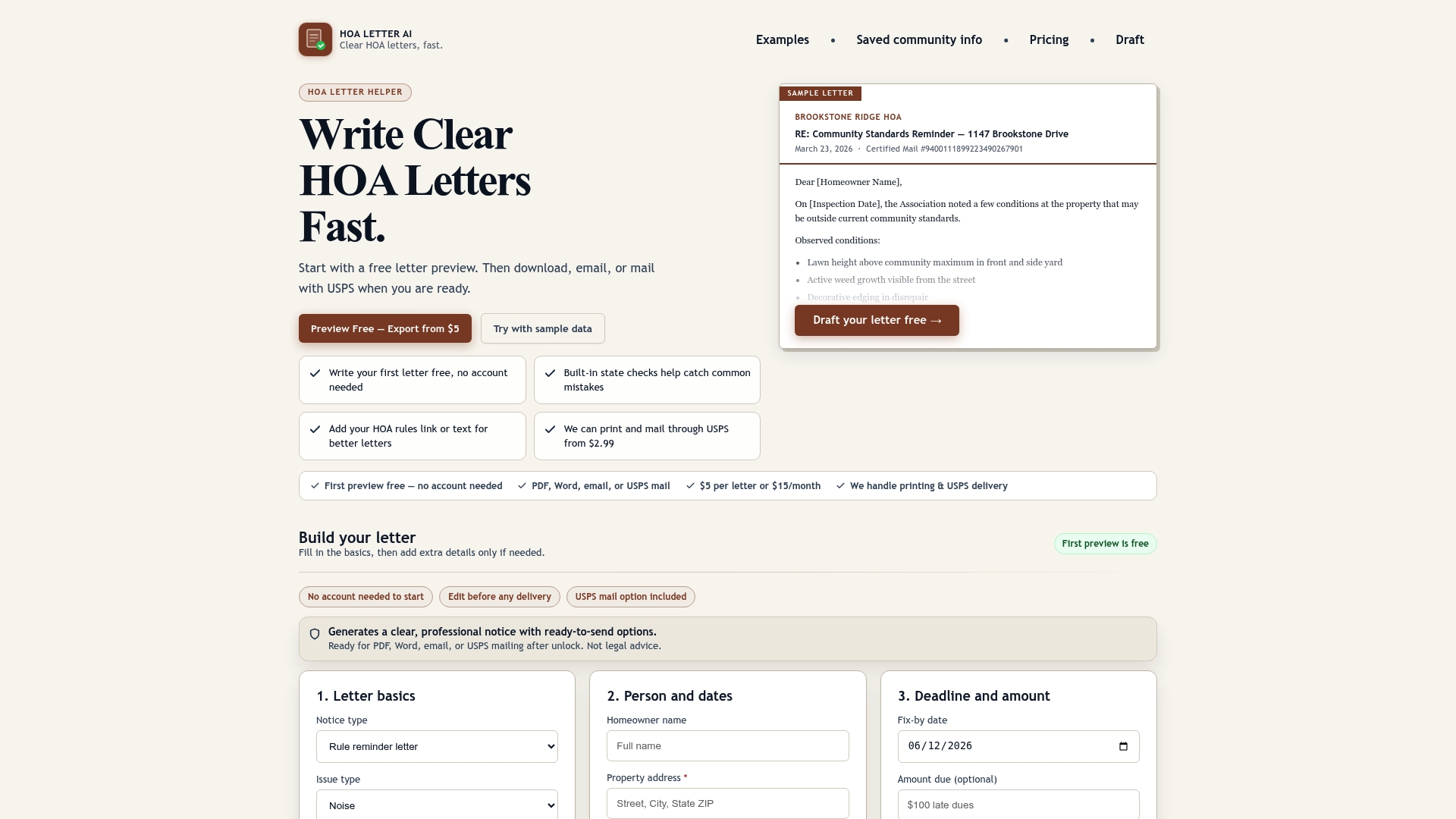
Every letter produced through Hoaletterai includes clear formatting designed for USPS mailing, with state-specific language built in. The platform covers HOA violation notice requirements across all states, so your letters meet the legal standards that make delivery confirmation meaningful. When the letter is correct and the mailing process is correct, your organization is protected. Hoaletterai handles the letter side so you can focus on the mailing procedure with confidence.
FAQ
What is USPS Certified Mail used for in organizations?
USPS Certified Mail is used to send legal notices, violation letters, and formal correspondence that require documented proof of mailing and delivery. It provides a tracking number, acceptance scan, and delivery signature that courts recognize as evidence.
Is a tracking number enough to prove delivery in court?
A tracking number alone is not sufficient proof of delivery in most legal disputes. Courts treat a signed Return Receipt as significantly stronger evidence than a tracking record without a signature.
Can someone other than the addressee sign for Certified Mail?
Yes. Any authorized person at the delivery address, such as a front desk employee or household member, can sign for Certified Mail. Organizations that need the named recipient to sign must add the Restricted Delivery service.
What happens if Certified Mail is refused or unclaimed?
Courts generally treat refused or unclaimed Certified Mail as constructive notice, meaning the recipient is legally considered to have received the notice. Keep the returned envelope and tracking record as documentation.
How long does USPS keep Certified Mail tracking records?
USPS retains tracking data and signature records for approximately two years after delivery. Organizations should save their own copies of tracking screenshots and Return Receipts immediately after delivery is confirmed.
Recommended
- Letter Templates in Organizations: What They Mean | HOA Letter AI
- Letter Format Compliance Legal Requirements: 2026 Guide | HOA Letter AI
- HOA Letter AI — HOA Violation Letter Generator (State-Compliant)
- HOA Collection Letters: A Respectful, Step-by-Step Reminder Sequence | HOA Letter AI
Drafting support for HOA notices
Use the HOA letter drafter to turn this guidance into a resident-ready notice, compare reusable HOA letter templates, or review the property manager workflow for higher-volume enforcement work.