
If you received an HOA weeds or landscaping violation notice, respond in writing and document the cure right away, and where it applies, cite state landscaping protections. Gather the notice itself, your community’s CC&Rs, and dated photos of the area before you write a word. Send your reply and evidence through whatever delivery method your HOA accepts, and keep proof that it arrived.
TL;DR:
- Check whether the cited rule sets a measurable standard, such as a grass limit of six inches; vague maintenance language can be harder to enforce.
- Washington protects drought resistant landscaping, while Colorado requires written notice and a fact finding opportunity before fines; verify local law because protections vary by state.
- Cure windows can run from 72 hours to 30 days, while urgent fire hazards may demand faster action; request a dated extension before the deadline.
- For a dispute, pair dated wide and close photos with factual comparisons or a landscaper’s maintenance note, then request a written hearing decision.
HOA Letter AIhoaletterai.comDraft a Clear, State-Aware ResponseHOA Letter AI helps homeowners create professional compliance letters using state-specific context, community rules, and built-in checks.Create a compliance letter
Table of Contents
- What the notice actually says: reading the rule, deadline, and cure instructions
- State law examples you can cite in your response
- Step-by-step: how to respond to a weeds violation notice
- Evidence that persuades: photos, comparisons, and expert notes
- Timelines, fines, and what happens if you don’t cure
- Preparing for a hearing: your case and whether you need a lawyer
- Preventing future notices with water-wise landscaping
- Getting a state-aware response built for you
- Why a calm, documented response works better than a fight
- Get a state-aware response in minutes
- FAQ
- Sources
What the notice actually says: reading the rule, deadline, and cure instructions
A weeds or landscaping violation notice is only useful once you know exactly what it is asking you to do. Most notices cite a specific covenant, rule, or architectural guideline, name a deadline, and describe what counts as a cure. Skimming past these details is the most common reason homeowners miss a window they could have easily met.
Start by finding the exact clause referenced in the notice. Some CC&Rs ban “weeds” without defining the term, while others list specific prohibited plants or set a maximum grass height. That distinction matters because vague language is harder for a board to enforce consistently, while a specific standard like “grass may not exceed 6 inches” leaves little room to argue.
Next, check how the HOA expects you to respond. Some associations require a written reply within a set window, others expect you to simply fix the issue and wait for reinspection, and some allow a request for additional time if you explain your plan. Our own HOA landscaping violation notice explained for homeowners breaks down common notice formats and the language boards typically use.
When you read the notice, look for:
- The exact covenant, rule, or ARC guideline cited, including any section number
- The cure deadline and whether it is calendar days or business days
- Whether the language is specific (named plants, height limits) or general (“unsightly,” “overgrown”)
- The stated procedure for inspection, appeal, or requesting an extension
- Who to contact and the accepted method of delivery for your response
If the notice cites a vague standard like “well-maintained appearance” without defining it, that ambiguity can work in your favor later if you end up disputing a fine. Boards that cannot point to a clear, applied-consistently standard have a weaker case at a hearing.
State law examples you can cite in your response
Several states have passed laws that limit how far an HOA can go in restricting drought-tolerant, native, or water-wise landscaping, and a few states also regulate how fines and cure periods must work procedurally. These statutes do not override every HOA rule, but they give homeowners real leverage when a notice conflicts with protected landscaping choices or skips required procedure.
In Washington, RCW 64.38.057 prevents governing documents from prohibiting the installation of drought-resistant landscaping, and it bars associations from punishing owners for reducing water use during a declared drought order. If your yard includes xeriscaping or reduced turf and your community is under a drought declaration, this statute is worth quoting directly in your response.
Texas has moved in a similar direction. Property Code provisions and related legislative changes prohibit HOAs from banning rain barrels, composting, and drought-resistant landscaping outright, and the model HOA landscape guidelines from Hill Country Alliance show how associations are encouraged to pre-approve water-wise designs rather than fight them. If you live in a Texas HOA and received a notice targeting a xeriscape bed or native plant border, this is the framework to reference.
Colorado takes a more procedural approach. C.R.S. § 38-33.3-209.5 requires written notice, a fact-finding opportunity before any fine, and defined cure periods, and it limits an association’s ability to pursue foreclosure over fines alone. Our Colorado HOA violation letters guide walks through how these notice and cure requirements apply in practice.
Many HOA enforcement disputes turn on whether the board followed its own documented procedure, according to Colorado’s statutory framework, which conditions fines on written notice and a hearing opportunity rather than automatic penalties.
A caveat applies across all three examples: landscaping and fine-procedure statutes vary significantly by state, and these are illustrations of how a statute can limit enforcement, not a guarantee that your state has an equivalent law. Always check your own state’s property code or HOA statute before citing one in a formal response.

Step-by-step: how to respond to a weeds violation notice
Once you understand the rule and the timeline, the actual response process is mechanical. Working through it in order keeps you from missing a step that could otherwise cost you a hearing or a fine.
- Confirm the deadline first. Note the exact date the cure period ends and whether weekends count, then mark it somewhere you will actually see it.
- Photograph the area immediately, before you touch anything, so you have a dated “before” record if the dispute ever reaches a hearing.
- Pull the CC&Rs and any landscape guidelines and find the precise language the notice cites, word for word.
- Draft a written response that quotes the cited rule, describes the corrective action you have taken or will take, states a specific completion date, and requests a reinspection.
- Cite applicable state law if your landscaping is drought-tolerant, native, or otherwise protected, naming the statute section directly rather than making a general legal claim.
- Send the response using a traceable method, such as certified mail or email with a read receipt, and keep a copy of everything.
- Log every contact with the board or management company, including dates, names, and what was said.
- If you cannot finish the cure in time, request a specific, reasonable extension in writing rather than letting the deadline pass silently.
Our guide to responding to an HOA compliance notice and HOA violation response letter template both walk through sample language for each of these steps if you want a starting draft rather than a blank page.
Pro Tip: Send your response the same day you receive the notice, even if the cure itself will take another week. A prompt written reply shows good faith and often buys you goodwill if you later need an extension.
Evidence that persuades: photos, comparisons, and expert notes
A fine often gets reduced or dropped not because the homeowner argued loudly, but because the evidence made the board’s position harder to defend. Building a simple evidence packet before your deadline gives you something concrete to point to at a hearing or in a follow-up letter.
Dated, clear photographs are the foundation. Take wide shots that show the whole area in context and close-ups of anything specific the notice mentioned, and keep the original files with their metadata intact rather than screenshots. Our guide on why HOA letters include photo evidence covers formatting and submission tips in more detail.
Neighbor comparisons can support a selective enforcement argument, but handle them carefully and factually. Document similar conditions on nearby properties with dates and photos rather than naming or confronting neighbors directly, and present the comparison as evidence of inconsistent enforcement, not as a complaint about someone else.
- Take wide and close-up photos the same day you receive the notice
- Document comparable conditions elsewhere in the community, dated and factual
- Request a brief note from a landscaper or local extension office describing the maintenance plan and timeline
- Reference integrated pest management guidance when describing non-chemical control methods you are using
A short note from a landscaping contractor or a county extension service can carry real weight, especially if it states what was done, when, and why the approach is appropriate for the plants involved. University IPM programs generally recommend mechanical and cultural weed control before chemical treatment, and citing that hierarchy in your response shows the board you are following an established maintenance standard rather than neglecting the yard.
Pro Tip: Keep every piece of evidence in one folder, named by date, so you can hand over a complete packet in minutes if the board requests one.
Timelines, fines, and what happens if you don’t cure
Cure periods vary by community and state, commonly lasting for a few weeks to a month for landscaping issues, with some notices requiring faster action for urgent safety concerns like fire-hazard brush. Acting within the first few days of receiving a notice gives you room to request an extension if needed, rather than discovering on day 13 that you are out of time.
Fines are typically levied per violation or per day the condition continues, and some states cap how much or how often an HOA can charge. In Colorado, for example, procedural limits require the board to provide notice and a hearing opportunity before a fine takes effect, and the statute restricts an association’s ability to foreclose over unpaid fines alone. Other states leave fine amounts largely to the governing documents, so the cap (if any) will be in your own CC&Rs or state HOA statute.
Missing a deadline usually triggers a reinspection, and many associations issue a second, harsher notice or begin daily fines if the issue is still unresolved. Repeated non-response can also affect your standing at a future hearing, since boards often weigh whether an owner engaged at all.
- Cure windows commonly fall between 72 hours and 30 days depending on severity
- Fines are frequently assessed per violation or per day until cured
- A second missed deadline often triggers escalated fines or a formal hearing notice
- Long-unpaid fines can in some states lead to a lien, and in rare cases small claims action
If fines go unpaid long enough, some associations place a lien on the property, and a smaller number pursue small claims for the balance. Knowing your state’s specific limits here matters, since a blanket assumption that “they can always put a lien on my house” is not accurate everywhere.
Preparing for a hearing: your case and whether you need a lawyer
Most associations offer some form of hearing or appeal before a fine becomes final, and understanding the structure ahead of time makes the process far less stressful.
- Request the hearing in writing as soon as you know you want to contest a fine, citing the specific notice and date.
- Bring your evidence packet: dated photos, the cited CC&R language, your written response, and proof of delivery.
- Present your case factually, focusing on what the rule requires, what you did, and when, rather than general complaints about the board.
- Ask for a written decision regardless of the outcome, so you have a record if you need to escalate further.
- Consider small claims court only if the amount in dispute is significant and you believe the board failed to follow its own notice and cure procedures, since many states like Colorado require that process to be followed before a fine is enforceable.
A lawyer is rarely necessary for a single weeds violation unless the fine is substantial, the board is pursuing a lien, or you believe the association violated state procedural requirements outright. For a routine dispute, a well-documented written response and hearing appearance resolve most cases without legal fees.
Preventing future notices with water-wise landscaping

The most durable fix is designing a yard that satisfies both your water goals and the board’s expectations before a notice ever arrives. Associations are generally more receptive to a plan presented in advance than to a surprise bed of native grasses discovered during a drive-through inspection.
Start by documenting a simple maintenance plan alongside any water-wise design. For professional design input, our partner’s guide on drought-tolerant landscaping covers plant selection and upkeep approaches that tend to read as “maintained” rather than “neglected” to a board doing a visual inspection.
- Submit a pre-approval packet with a plant list, planting diagram, and maintenance schedule before installation
- Include contractor contact information if a professional installed or maintains the design
- Favor mechanical and cultural weed control, like mulching and hand removal, before chemical treatment
- Propose a written variance or guideline update at a board meeting rather than installing first and explaining later
If your community’s rules do not yet address drought-tolerant landscaping, raising it as a proposed guideline update, backed by a state statute like the Washington or Texas examples above, is often more effective than fighting individual notices one at a time.
Getting a state-aware response built for you
Writing a response that cites the right CC&R language and the correct state statute under a tight deadline is exactly the gap we built our tools to close. Some templates fold state-specific landscaping protections and notice-and-cure rules directly into the drafting process, so you are not starting from a blank page or guessing which statute applies to your situation.
A free notice check lets you confirm whether the notice you received includes the elements it is legally required to have, and a response generator turns your facts into a concise, rule-cited reply in minutes rather than hours. When a cure window is as short as 72 hours, that speed matters more than polish. For a ready starting point, our HOA landscaping violation response letter and lawn maintenance violation letter template are both built around the exact structure boards expect to see: cited rule, corrective action, timeline, and request for reinspection.
Why a calm, documented response works better than a fight
Most weeds disputes get resolved by paperwork, not by who argues harder at a meeting. Keeping every interaction factual, dated, and specific tends to defuse a situation that could otherwise escalate into repeated notices and compounding fines.
In our experience looking at how these disputes typically play out, a homeowner who documents a cure and hands the board clear evidence almost always does better than one who disputes the notice on principle without showing any corrective action. A good template does not replace your judgment, but it saves you from reinventing the structure of a response when you are already working against a deadline.
— Blake
Get a state-aware response in minutes
Once you know what your notice requires, the fastest path to a compliant reply is a tool that already has the state law and formatting built in, so you are not drafting from scratch under deadline pressure. We built our templates around exactly this problem: a free preview so you can see the letter before paying anything, state-specific guidance baked into the drafting flow, and optional USPS mailing if you want a certified paper trail without a trip to the post office.
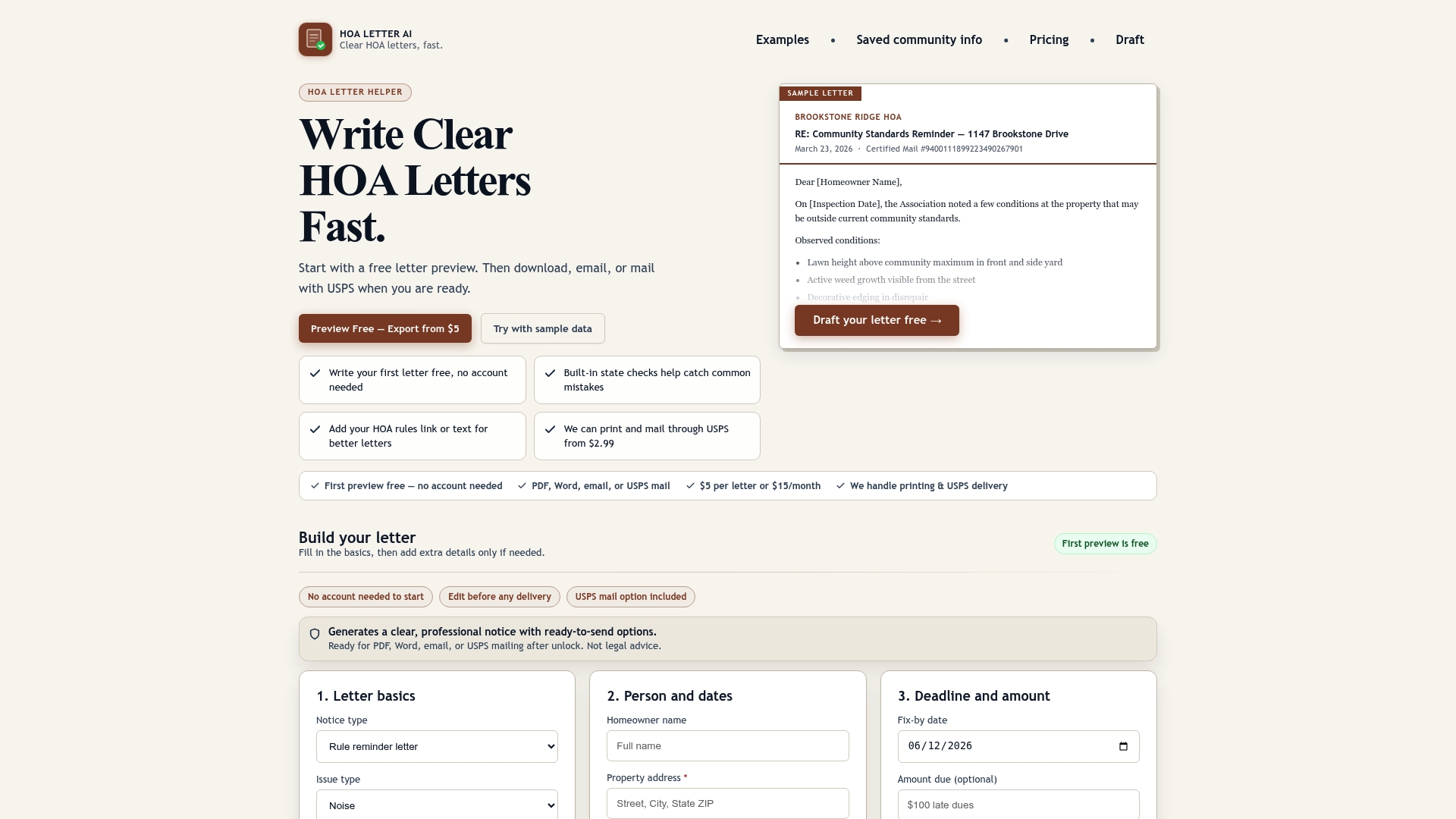
- Preview your response letter free, with no account required to start
- Choose a one-off $5 letter for a single violation response, or a homeowner response letter for $19 if you need a fuller reply
- Add USPS mailing from $2.99 if you want certified delivery handled for you
- Property managers and boards handling multiple notices can look at our PM Starter and PM Pro plans
Run the free notice check first to confirm your notice includes everything it is required to, then generate your response and get it sent before your cure window closes. Start at HOA Letter AI and have a draft ready in minutes.
This article is general information, not a substitute for advice from a qualified lawyer. Consult a qualified legal professional about your own circumstances before acting on anything here.
FAQ
Do all HOAs require you to cut your grass?
Most HOAs include some grass height or general maintenance requirement in their CC&Rs, but the exact standard varies widely between communities. Some set a specific height limit, while others use broader language like “well maintained,” so you need to check your own governing documents rather than assume a universal rule.
What is the most commonly reported HOA violation?
Landscaping and yard maintenance issues, including weeds, overgrown grass, and general appearance, are among the most frequently cited HOA violations, according to homeowner guidance on weed-related fines. Clear, specific rules tend to generate fewer disputes than vague “unsightly” language.
Is there a maximum fine an HOA can charge for a violation?
Fine limits depend entirely on your state and your community’s governing documents rather than a single national cap. Some states, like Colorado, impose procedural limits requiring notice and a hearing before a fine takes effect under C.R.S. § 38-33.3-209.5, while other states leave the amount largely to the HOA’s own rules.
What should I check before assuming my HOA’s weed rule applies to me?
Check whether your landscaping qualifies for a state protection, such as drought-resistant plantings under Washington’s RCW 64.38.057 or water-wise designs addressed in Texas-area model landscape guidelines. Also confirm the notice cites a specific, enforceable rule rather than vague language, since that distinction affects whether the violation will hold up if disputed.
Sources
- RCW 64.38.057
- C.R.S. § 38-33.3-209.5 (Colorado)
- Model HOA landscape guidelines (Hill Country Alliance)
- Can an HOA fine you for weeds in your yard? (Gardening Know How)