
What is the letter standardization process?
The letter standardization process is the systematic creation and management of uniform letter templates to ensure consistent, efficient, and high-quality communication across an organization. Rather than drafting each letter from scratch, standardization replaces ad-hoc document creation with logic-driven templates and reusable content blocks that produce predictable, professional results every time.
Think of it as the difference between a kitchen that improvises every dish and one that runs on tested recipes. The output is more reliable, training new staff takes less time, and quality does not depend on who happens to be at the stove.
The core components of a well-built standardization system include:
- Uniform templates: Pre-built letter structures with fixed layout elements such as margins, fonts, and section order
- Standard formatting rules: Consistent choices like full block format with Times New Roman 12pt, single spacing, and left-aligned components
- Modular paragraph libraries: Reusable content blocks that can be assembled in different combinations without creating a new template for every scenario
- Logic-driven variables: Placeholder fields (recipient name, date, violation type) that populate automatically based on the situation
- Governance rules: Defined ownership, naming conventions, and approval workflows that keep the template library from growing out of control
Why standardizing letters matters more than you might think
Inconsistent letters create real problems. A compliance notice that uses different language than last month’s version can confuse recipients, invite legal challenges, and erode trust in the organization sending it. Standardization reduces errors, cuts variability, and keeps communication aligned with organizational policy without requiring every writer to reinvent the wheel.
For organizations that send letters at volume, the operational case is just as strong:
- Error reduction: Fixed templates eliminate the typos, missing fields, and formatting inconsistencies that plague manually drafted letters
- Faster onboarding: New staff can produce compliant, professional letters on day one because the structure is already built
- Compliance confidence: When regulations change, updating one template propagates the fix across every future letter, rather than hunting down dozens of individual documents
- Consistent tone and messaging: Recipients receive the same quality of communication regardless of who drafted the letter or when
- Audit readiness: Standardized records are easier to search, categorize, and present during reviews or disputes
The compliance angle deserves special attention. In regulated industries, including homeowners’ associations, insurance claims, and government correspondence, the language in a letter is not just a style choice. It carries legal weight. A letter that omits a required disclosure or uses the wrong notice period can void enforcement action entirely. Standardization is the mechanism that keeps those details locked in place.
Pro Tip: Don’t wait for a compliance failure to trigger your standardization project. Audit your current letter inventory first and identify which letters carry the highest legal or reputational risk. Start there.
How to standardize letters: a step-by-step approach
A phased approach works far better than trying to overhaul everything at once. Here is a practical roadmap:
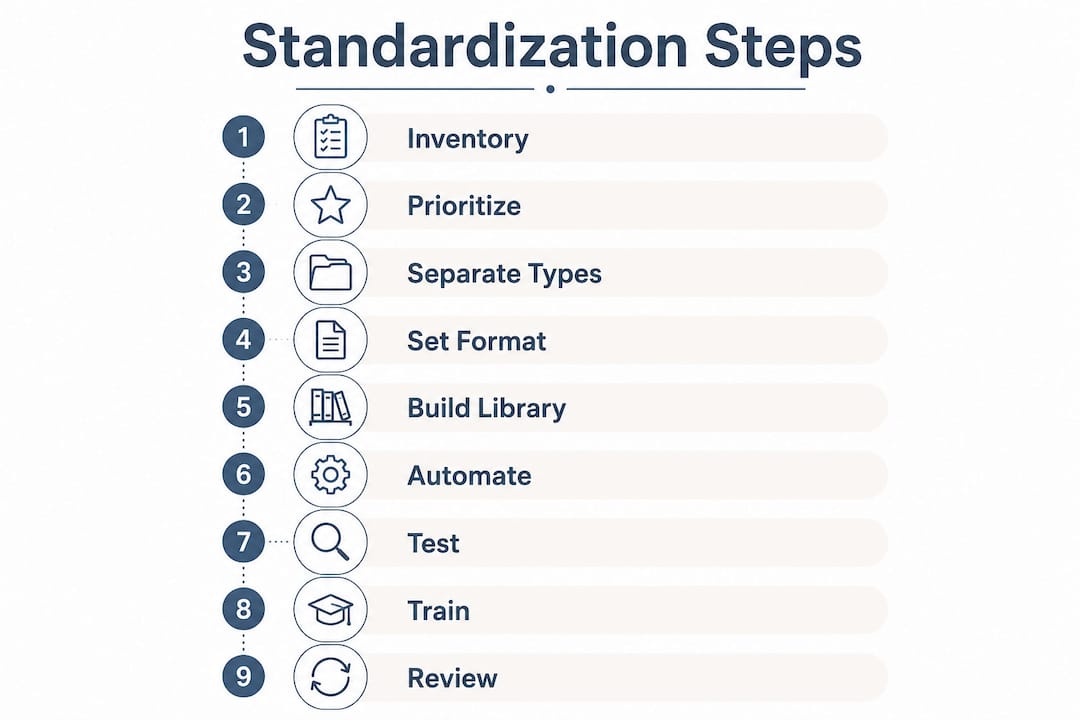
Step 1: Inventory your current templates
Pull every letter, notice, and form your organization currently uses. Include unofficial versions saved on individual desktops, not just the ones in shared folders. You will almost certainly find duplicates, near-duplicates, and outdated versions still in circulation. This inventory is the foundation of everything that follows.
Step 2: Identify high-impact areas
Not all letters carry equal weight. Prioritize the ones sent most frequently, the ones with the highest compliance stakes, and the ones most likely to generate disputes or confusion. In an HOA context, that typically means violation notices, fine letters, and hearing notifications. Tackle these first.

Step 3: Separate necessary variation from legacy clutter
Some variation in letters is legitimate. A first notice and a final warning genuinely need different language. But much of what looks like necessary variation is actually template sprawl, the result of someone creating a one-off document years ago to work around a rigid system, and that document never getting cleaned up. Be honest about which differences serve the reader and which are just historical accidents.
Step 4: Define your formatting standards
Agree on the rules before you build anything. This includes:
- Font choice and size (Times New Roman 12pt is the widely recognized default for formal correspondence)
- Margin widths and line spacing
- Header structure: sender address, date, recipient address, salutation
- Body paragraph conventions: introductory paragraph, supporting detail, closing with next steps
- Complimentary close and signature block format
The NARA correspondence guide, based on the U.S. Government Correspondence Manual, provides a useful reference for formal letter structure, including heading, salutation, body, complimentary close, and signature as the five standard parts.
Step 5: Build your modular paragraph library
Instead of writing a unique letter for every possible scenario, build a library of approved paragraph blocks. A violation notice, for example, might draw from a pool of opening paragraphs, a pool of violation-specific body paragraphs, and a pool of closing paragraphs with different escalation levels. Assembling these blocks dynamically means you can cover hundreds of scenarios with a fraction of the templates you would otherwise need.

Step 6: Restructure for automation
Once your content is modular, you can introduce logic-driven variables. Fields like [Resident Name], [Violation Type], and [Response Deadline] populate automatically from your data source. This is where letter automation becomes practical rather than aspirational, because the underlying content is already clean and consistent.
Step 7: Test with real scenarios
Run your new templates against actual cases before rolling them out. Check that the logic variables populate correctly, that the tone is appropriate across different escalation levels, and that the formatting holds up when printed and when viewed on screen.
Step 8: Train the people who will use the system
Templates only work if the people using them understand why the rules exist. A brief training session that explains the rationale behind the standardization choices, not just the mechanics, dramatically improves adoption. Staff who understand the “why” are far less likely to create workarounds.
Step 9: Establish a review cycle
Set a calendar reminder to audit your template library at least once a year, and immediately after any regulatory change that affects your correspondence. Templates drift. Language that was compliant in 2024 may not meet 2026 requirements. A scheduled review keeps the library current without requiring a full overhaul.
What organizations actually gain from letter standardization
The benefits of a well-executed standardization program show up in concrete, measurable ways. Organizations that have gone through the process consistently report the same cluster of improvements.
Reduced template sprawl. Before standardization, it is common to find dozens of versions of what is functionally the same letter. After a consolidation project, that number drops sharply. Fewer templates mean fewer opportunities for the wrong version to get sent, and far less maintenance overhead when rules change.
Faster compliance updates. When a regulation changes, a standardized system requires updating one approved template rather than tracking down every staff member’s personal version. That speed advantage is especially valuable in regulated environments where the window between a rule change and its effective date can be short.
Clearer communication for recipients. Letters built from approved, tested language are easier to understand than ones drafted under time pressure by whoever happened to be available. Clearer correspondence reduces the volume of follow-up calls and disputes, which saves time on both sides.
Additional benefits organizations report include:
- Shorter letter production time per document
- Reduced back-and-forth between drafters and reviewers
- Consistent brand voice and professional appearance across all outgoing mail
- Easier training for new staff, who can rely on the template rather than institutional knowledge
- Better audit trails, since standardized documents are easier to categorize and retrieve
One area that often surprises organizations is the impact on the recipient experience. When letters are clear, consistent, and use plain language, recipients are more likely to understand what is being asked of them and respond appropriately. That outcome matters whether you are running an insurance claims department, a government agency, or an HOA board.
For HOA boards specifically, standardized HOA letters reduce the risk of enforcement actions being challenged on procedural grounds, which is one of the most common ways violations go unresolved.
Real-world practices that make standardization stick
Knowing the steps is one thing. Getting a standardization project to actually land, and stay landed, is another. The organizations that succeed share a few habits that the ones who struggle tend to skip.
Start smaller than you think you need to. A common mistake is waiting for a full system overhaul before beginning standardization. Experts recommend identifying the most common language across your existing letters and reducing duplication there first. A focused project covering your top ten most-used letters delivers more value faster than a sprawling initiative that stalls before completion.
Involve the people who write the letters. Frontline staff know which template nuances are genuinely necessary and which are legacy clutter that nobody would miss. A standardization project driven entirely by management or IT tends to produce templates that look clean on paper but get quietly circumvented in practice. The people closest to the work are your best source of insight on what variation actually serves a purpose.
Treat it as a product, not a project. A template library that gets built once and never touched will be out of date within a year. The organizations that maintain effective standardization treat their template library the way a software team treats a product: with ownership, versioning, and regular releases. Assign someone responsibility for the library. Give them time to maintain it.
Use a modular approach from the start. Building a paragraph library rather than a collection of monolithic templates gives you far more flexibility without sacrificing consistency. You can add a new scenario by combining existing approved blocks rather than drafting an entirely new document from scratch.
Common pitfalls to avoid:
- Letting individual departments maintain their own unofficial template collections in parallel with the official library
- Building templates that are so rigid they cannot accommodate legitimate variation, which drives staff to create workarounds
- Skipping the inventory step and building new templates on top of existing confusion
- Treating the rollout as the finish line rather than the starting point of ongoing maintenance
Pro Tip: Schedule a 30-minute quarterly review of your template library. Check for any new one-off documents that have been created outside the system, and either absorb them into the official library or retire them. Catching sprawl early is far easier than cleaning it up after it has compounded for two years.
The human-centered principle applies even when you are using technology to automate letter production. Tools that automate customer communications work best when the underlying content has already been standardized by people who understand the communication goals. Technology accelerates a good process. It amplifies a bad one.
How Hoaletterai puts these principles to work
For HOA boards and property managers, the letter standardization process is not abstract. Every violation notice, courtesy warning, and hearing notification carries real consequences for real residents. Getting the language right, every time, without spending an hour on each letter, is exactly the problem Hoaletterai was built to solve.
Hoaletterai applies the principles covered here directly: pre-built templates that follow recognized letter formatting standards, state-specific language built in, and logic-driven fields that populate from your community’s data. You get a one-page preview before anything goes out, and USPS mailing is available without needing a separate tool.
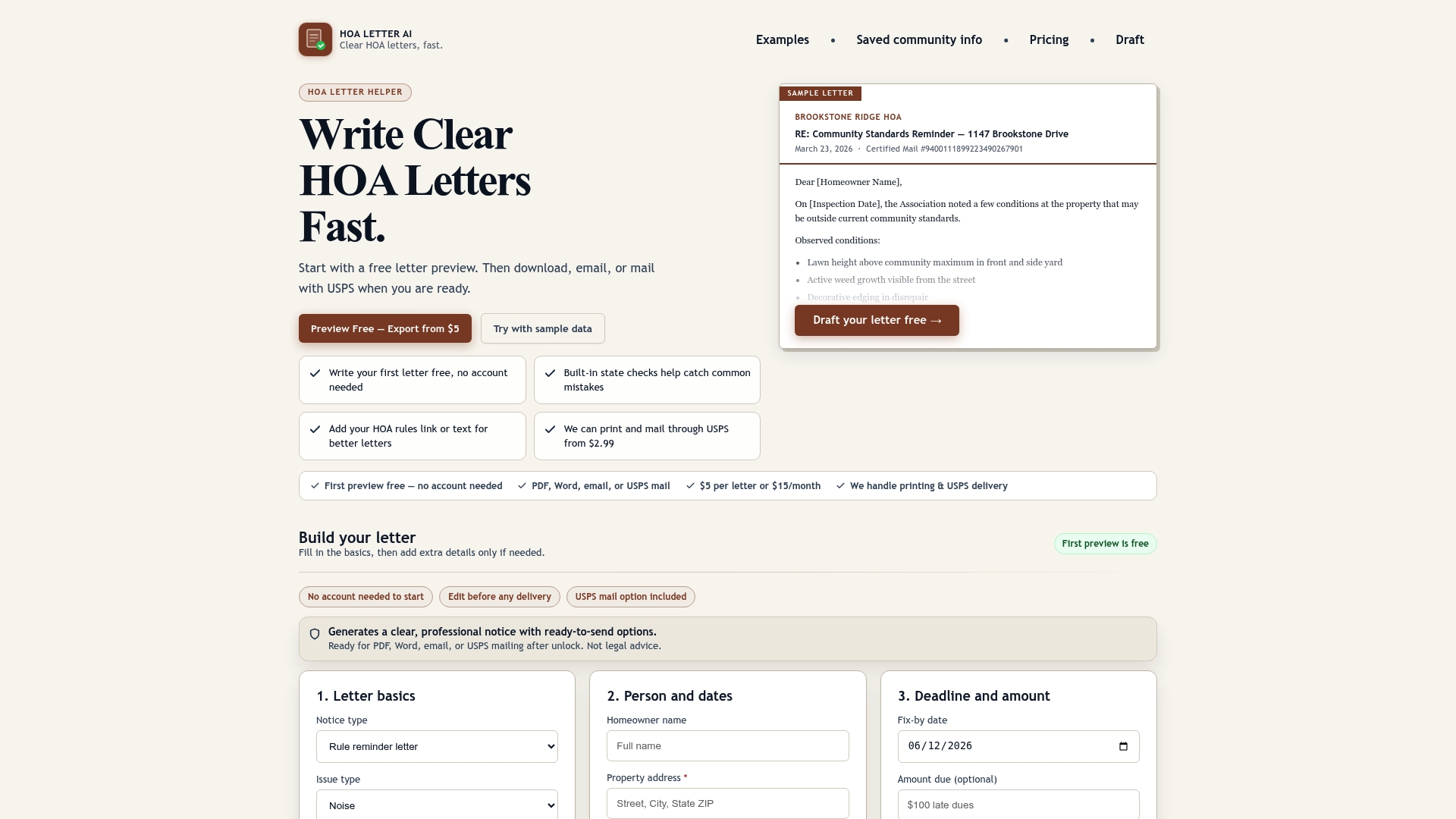
If your board is still drafting violation letters from scratch, or working from a folder of inconsistent old templates, Hoaletterai gives you a standardized, compliant starting point immediately. California boards can explore state-specific violation templates built to match California HOA notice requirements. For a ready-to-use starting point, the HOA violation letter generator lets you preview a letter before committing to anything.
Key Takeaways
The letter standardization process replaces ad-hoc drafting with uniform, logic-driven templates that reduce errors, speed compliance updates, and produce consistent communication at scale.
| Point | Details |
|---|---|
| Start with an inventory | Audit every letter your organization currently uses before building anything new. |
| Modular libraries beat monolithic templates | Reusable paragraph blocks cover more scenarios with fewer documents to maintain. |
| Frontline staff involvement is critical | The people who write letters daily know which variations are necessary and which are clutter. |
| Standardization requires ongoing maintenance | Schedule regular review cycles; templates drift out of compliance without active management. |
| Compliance letters carry legal weight | In HOA and regulated contexts, missing required language can void enforcement action entirely. |